A project series that critically explores the colonial and racist imagery within the mural at Bremen’s central station (Brinkmann Mosaik) by fragmenting and over-writing the image of the transatlantic ship, situating it in dialogue with diverse local contexts and interconnected causes.
- Mosaic Speaking II, Feb 2025
- The Wreckage Of the Sunk Ship (Part two), Dec. 2024 – Feb. 2025
- A Workspace to Take the Whole Apart, November 2024
- Dialogic session with Azadeh Sarjoughian, May 2024
- The Wreckage Of the Sunk Ship (Part one), May 2024
- Beyond Undoing A Rediscovery (Part two), March 2024
- A Rehearsal To Scuttle A Monument, February 2024
- Mosaic Speaking: I feel dead, please animate me, September 2023
- Beyond Undoing A Rediscovery (Part one), May 2023
Mosaic Speaking II, Feb 2025
Conversation series, published on SoundCloud
in conversation with Hodan-Ali Farah, Minna Henriksson, Ali Ali, Fatou Sillah, and Abdur Rehman Zafar
Mosaic Speaking II is the second chapter in a series of conversational works that cultivate inter-local and trans-regional dialogue by carrying over-written mosaic fragments alongside various interlocutors—tarrying with the diasporic break as a generative force. The conversations were recorded between August and December 2024 in Bremen, Helsinki, and Turku, and are presented in chronological order. Each recording took place while carrying the mosaic fragments through public space.
The Wreckage Of the Sunk Ship (Part two), Dec. 2024 – Feb. 2025
Exhibition at Gerhard Marcks Haus Pavilion
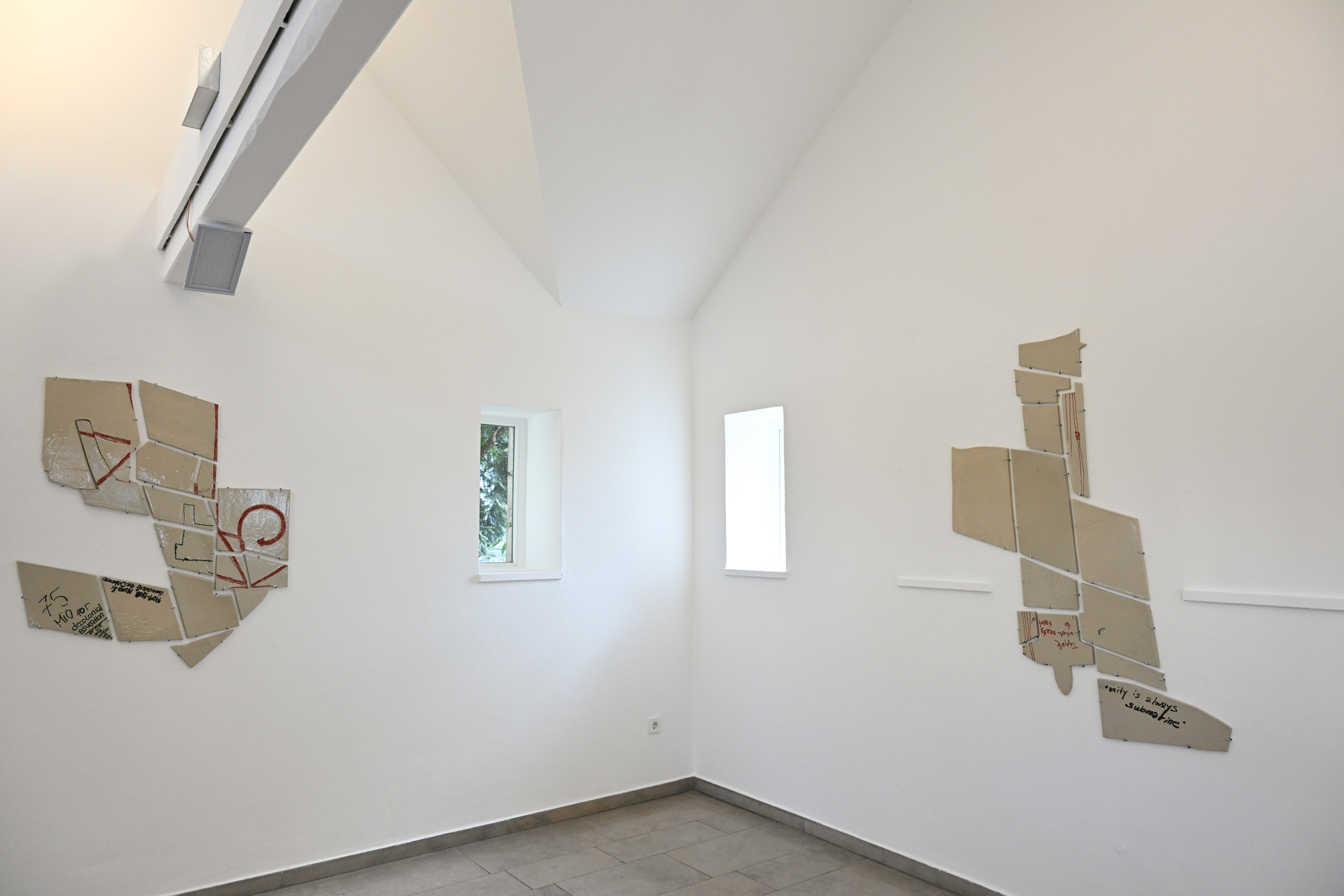
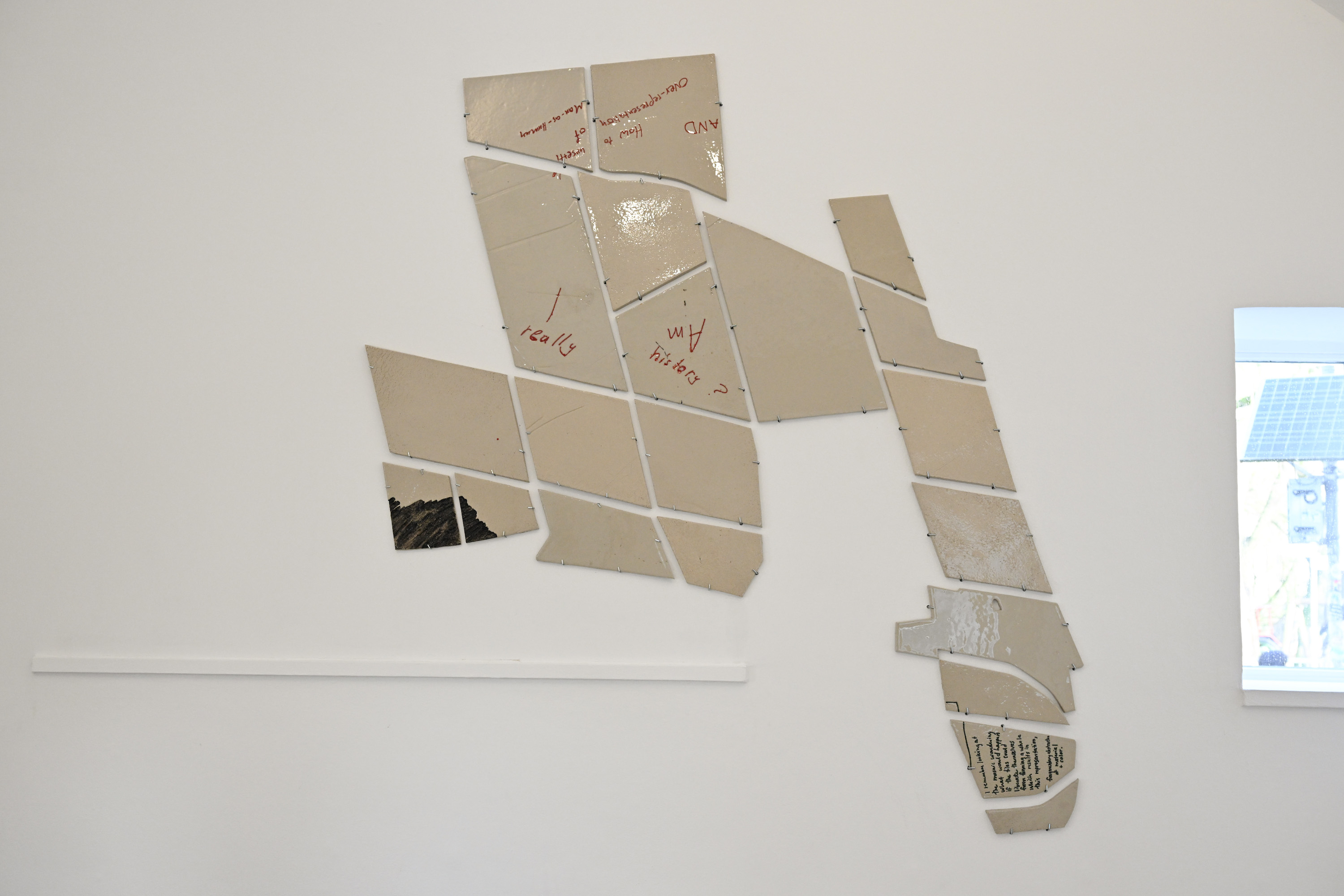
In the Pavilion of the Gerhard-Marcks-Haus, Aria Farajnezhad responds artistically to the colonial mosaic mural at Bremen’s main railway station. He confronts viewers with a collection of overwritten ceramic mosaics and audio recordings of conversations with Hodan-Ali Farah, Fatou Sillah, Abdur Rehman Zafar, Anna Blahaut and Minna Henriksson that critically discuss Bremen’s role in colonialism. Structural racism and global inequality are also taken up as themes. The project was launched in May 2023 under the title “Beyond Undoing a Rediscovery”. Now, following stints at the GAK, the Städtische Galerie Bremen and Horner Eck, the series is continued at the Gerhard-Marcks-Haus from December 2024 until February 2025.
source: https://www.instagram.com/reel/DDhcRUuimQh/
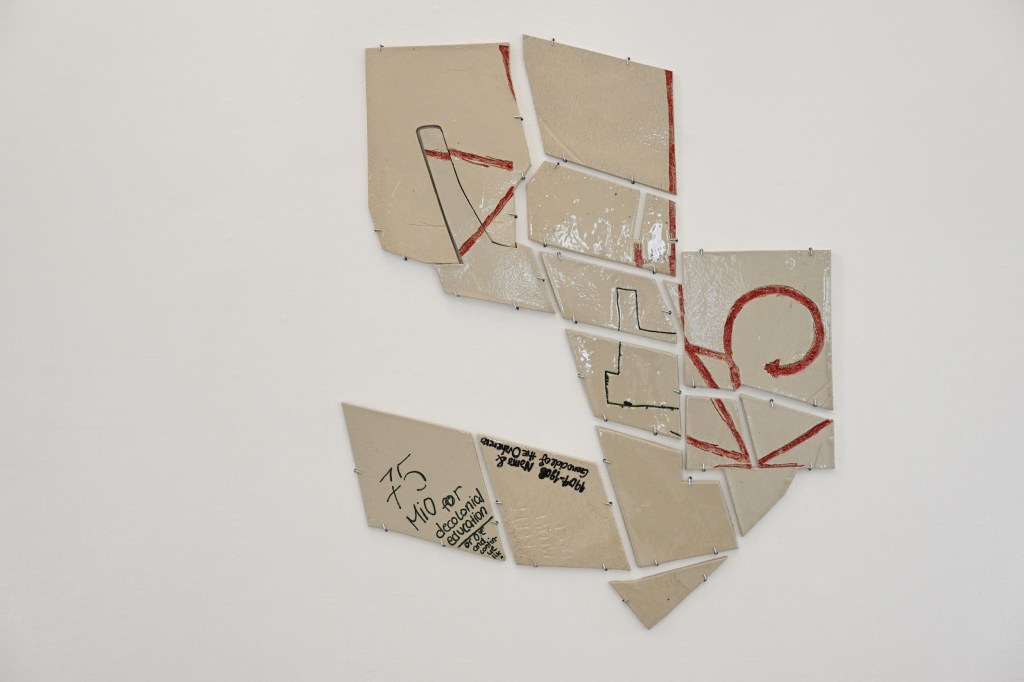
Photo: Sandra Beckefeldt
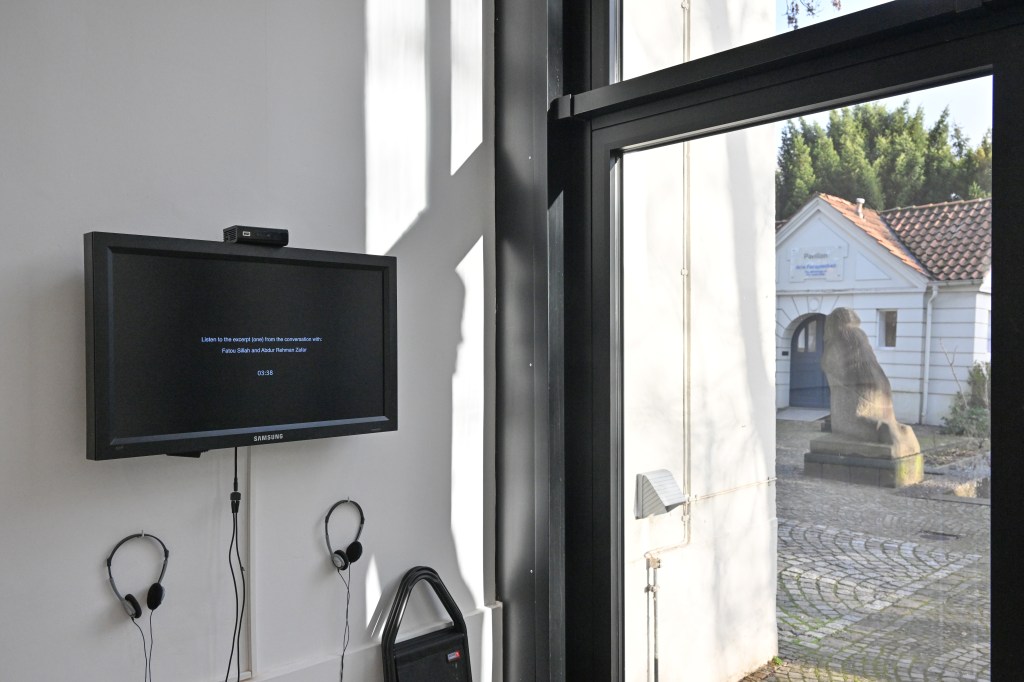
Photo: Sandra Beckefeldt
These are still images of the video which was shown as part of the exhibition referencing placement of the Mosaics by the invited interlocutors. below you find a short description of each particular location and the person who carried and placed them. For more information you are invited to listen to the excerpt of the conversation via the link that is provided for each one.
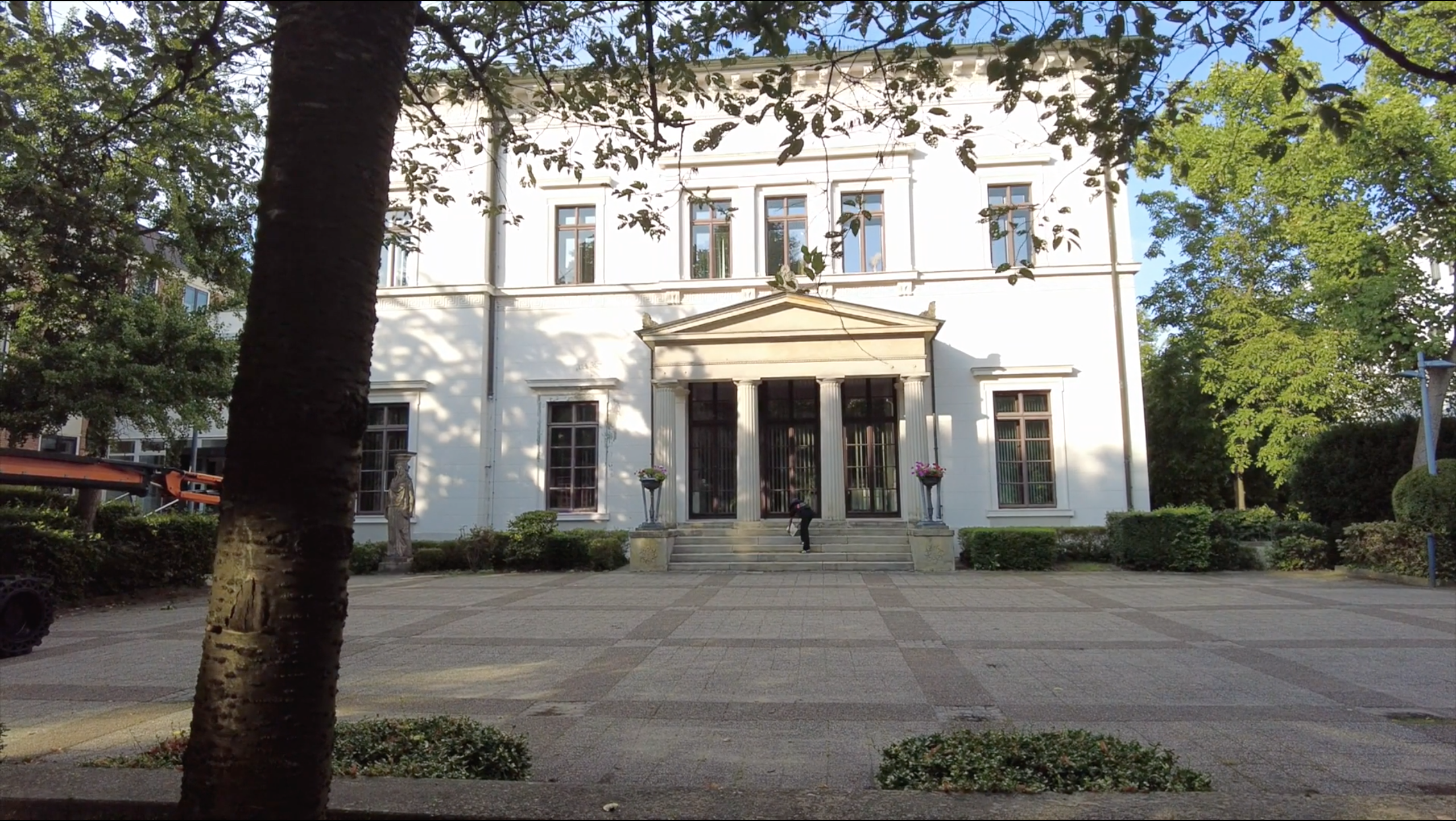

Mosaic P2 was carried and placed with Hodan Ali Farah in front of the senate for interior Bremen, which is responsible for upholding anti-black racist laws around birth certificates targeting for instance Nigerian and Ghanaian mothers. more info at: born-twice.de/birth-certificate-denial/protest
Listening to the conversation Hodan Ali Farah
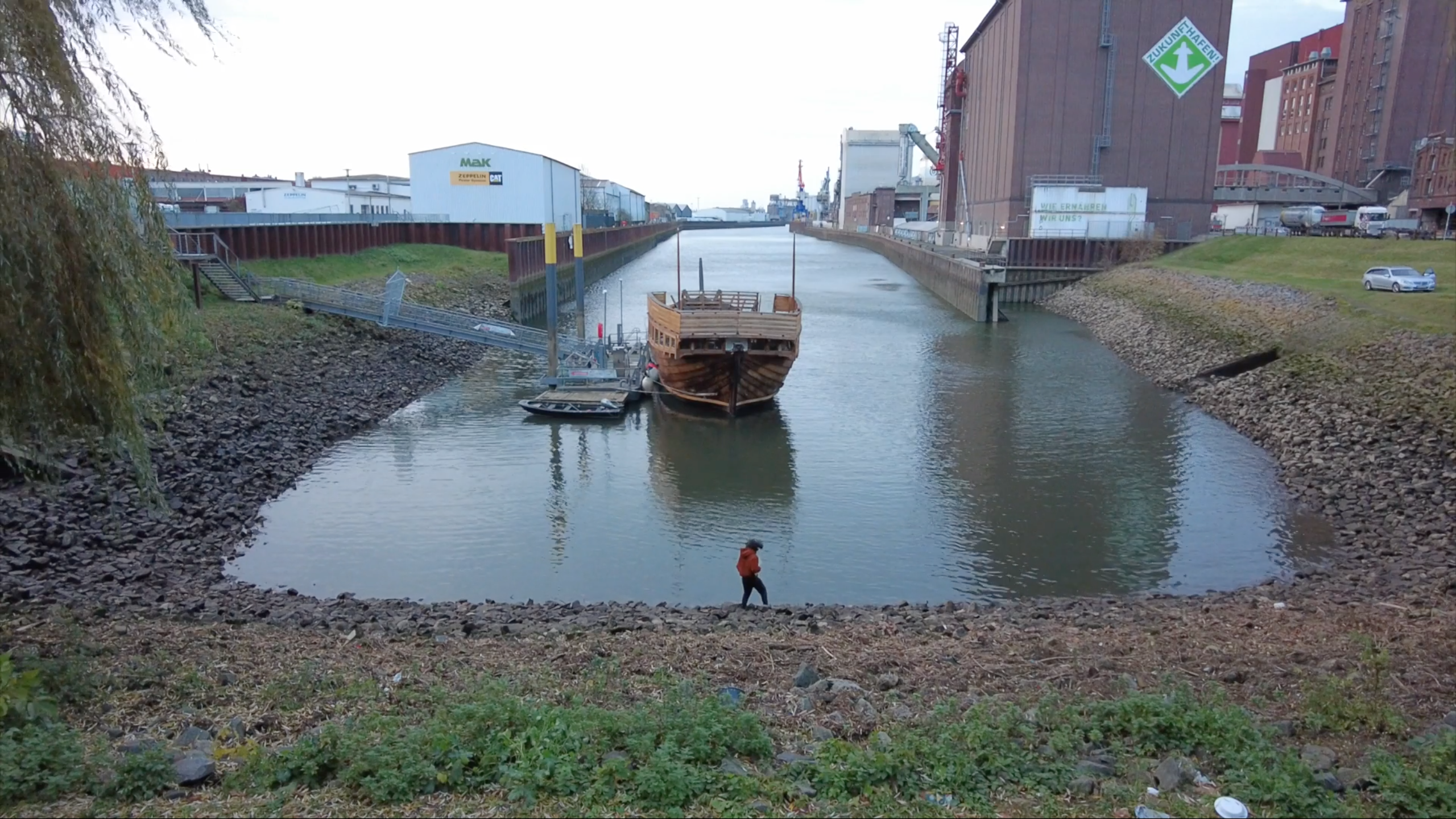

Mosaic F5 was carried with Abdur Rehman Zafar and placed at Weser River in Bremen, which witnessed Bremen’s participation in colonial trade and enslavement. The idea was suggested by Abdur as a responce to the sentence over-written on the mosaic “unity is always submarine”.
Listening to the conversation Abdur Rehman Zafar
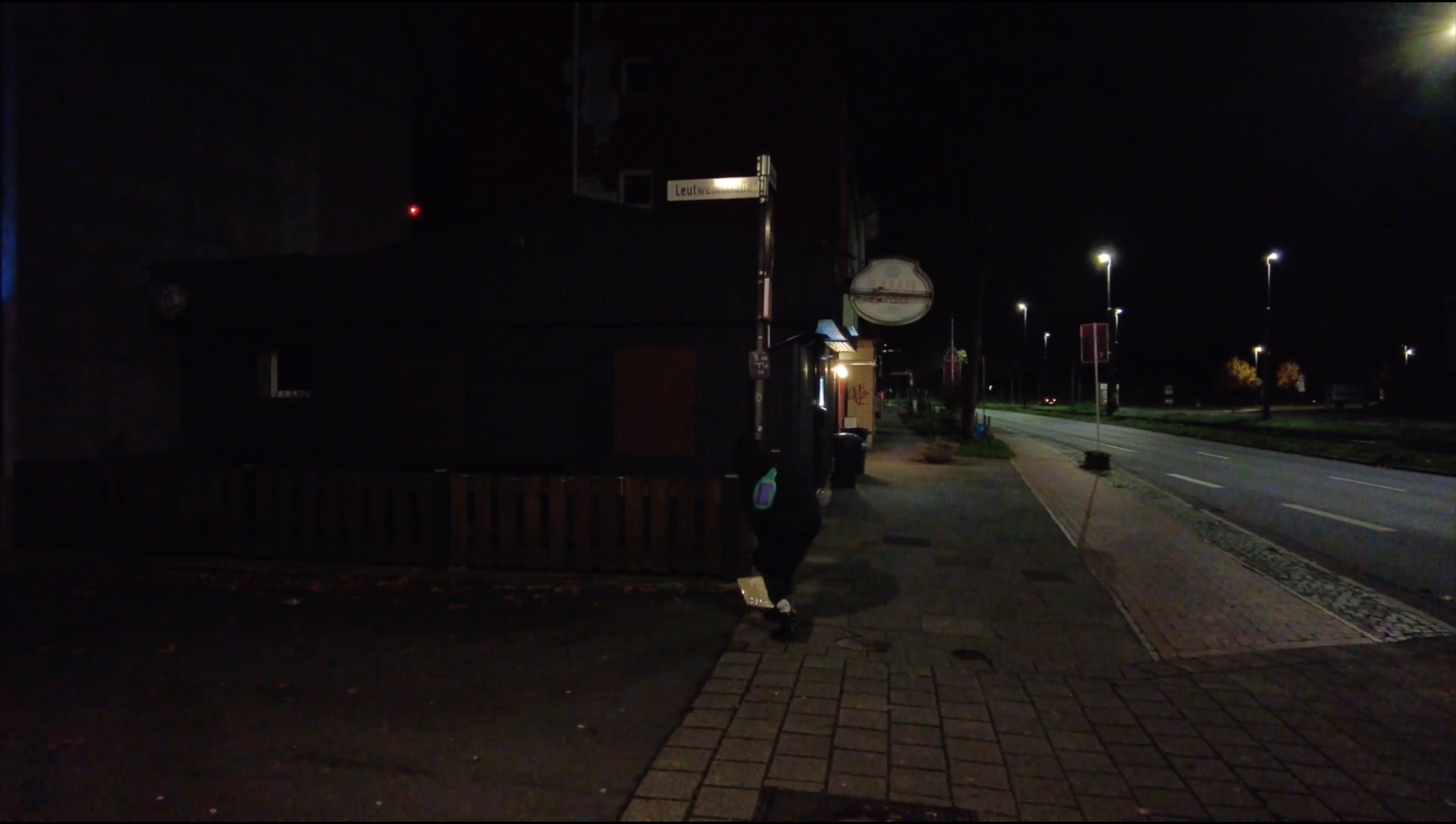
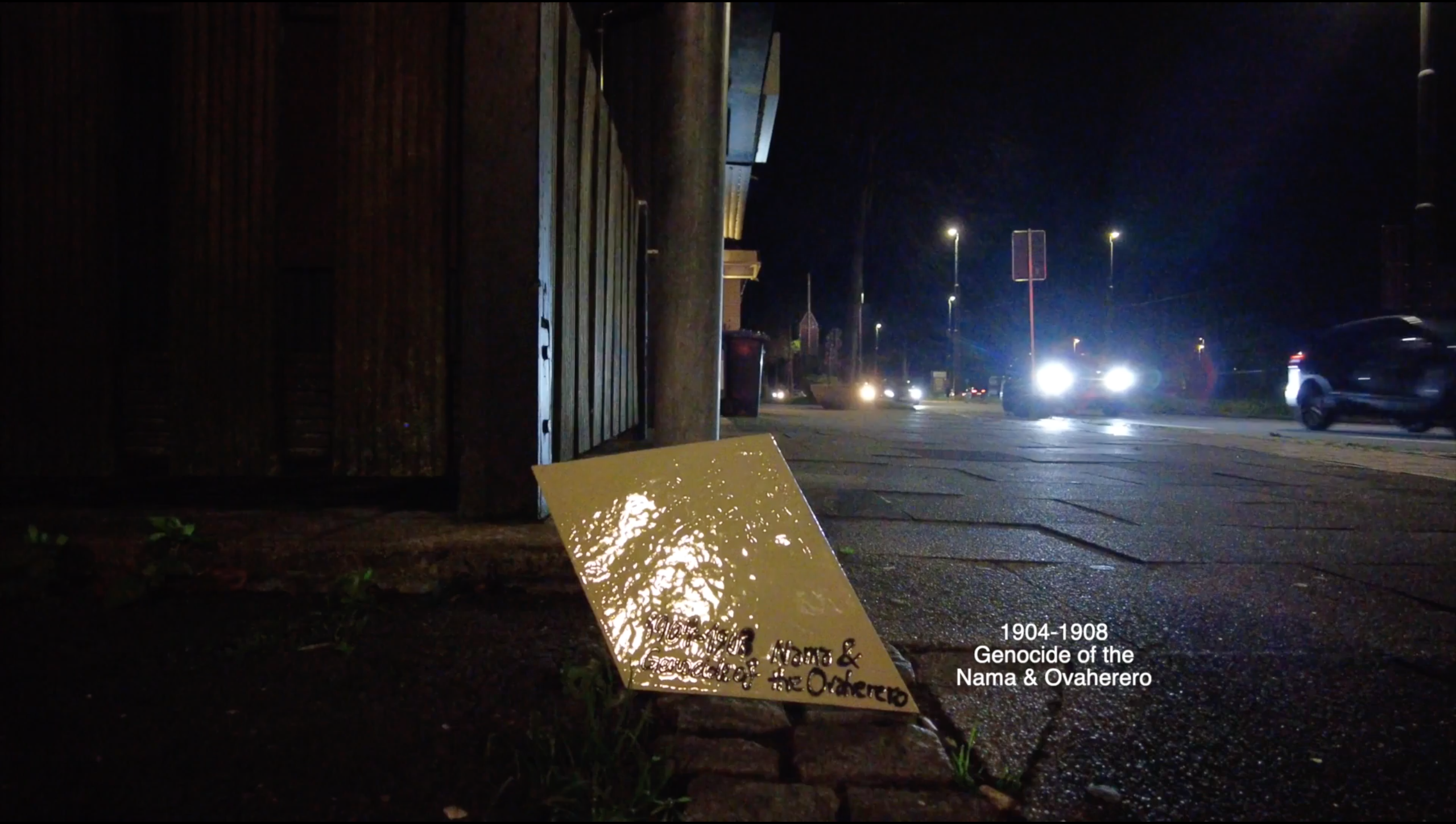
The mosaic Q4 has been carried and placed with Fatou Sillah at the sign of Leutweinstrasse in Walle, Bremen. Theodor Leutwein was a German military officer and the governor of German Southwest Africa from 1894-1905. He was instrumental in putting Nama and Herero people against each other and paving the way for the extermination order that caused the Namibian genocide (1904-1908) known to be the first genocide of the 20th century committed by the German empire.
listening to the conversation with Fatou Sillah
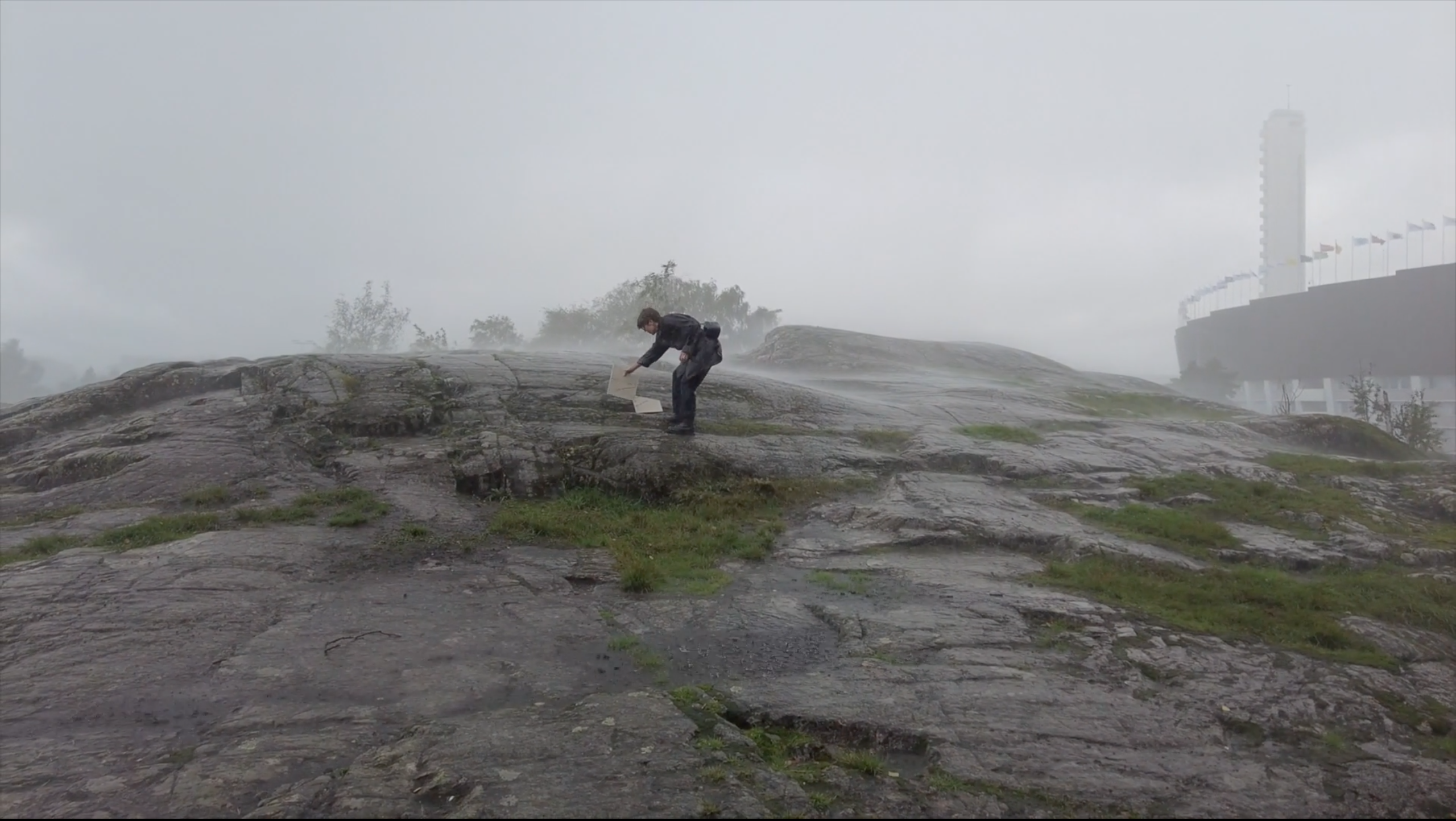
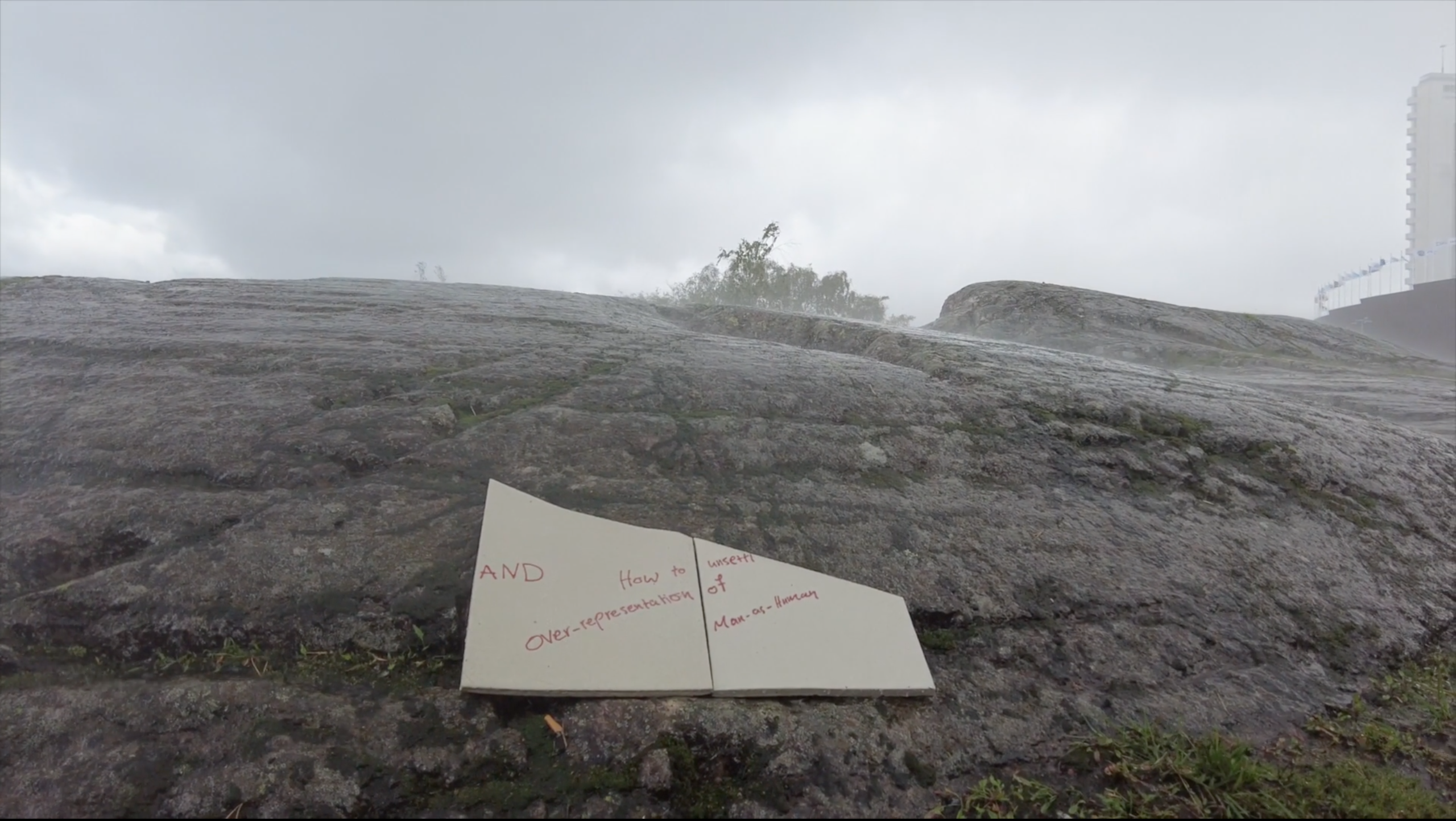
The mosaic K1 and L1 were carried and placed with Minna Henrickson at the Mäntymäki hill (Helsinki, Finland) where the Red socialist fighters of the 1918 Finnish Civil War were buried. Later, the bodies were dug out by the white nationalists and relocated to Malmi Cemetery as a way to make the memorization impossible.
Listening to the conversation with Minna Henrickson
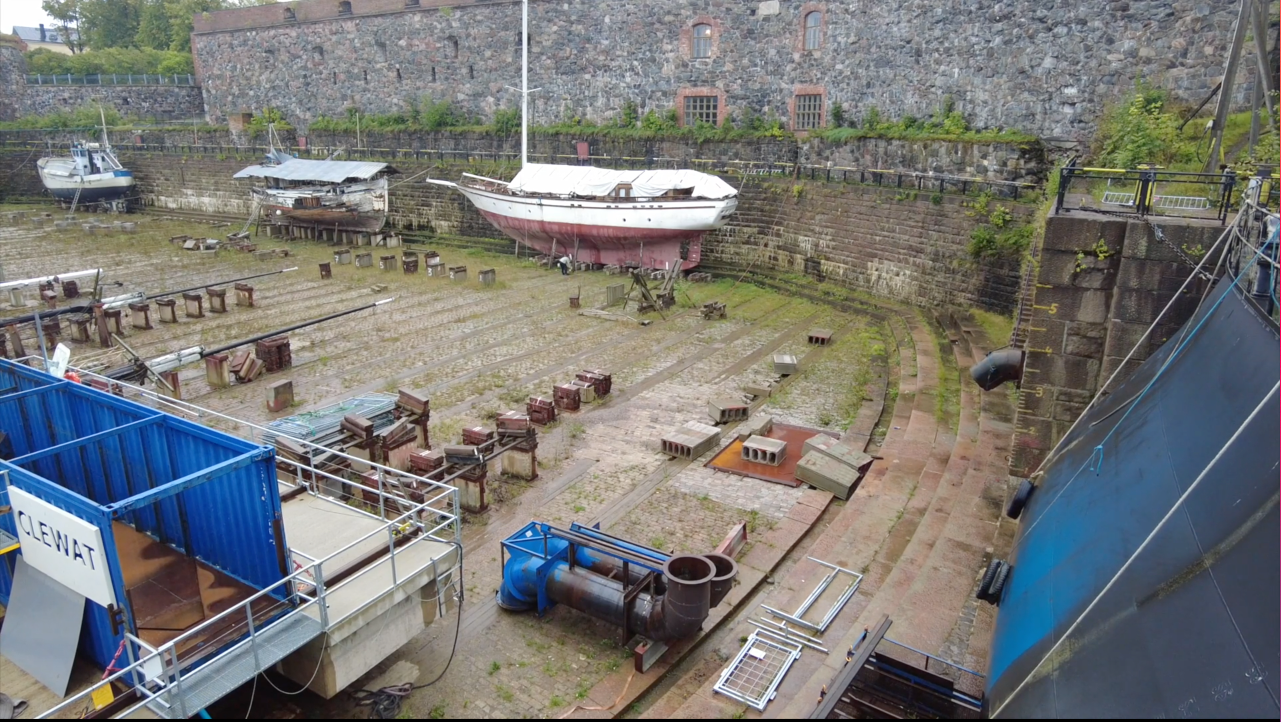
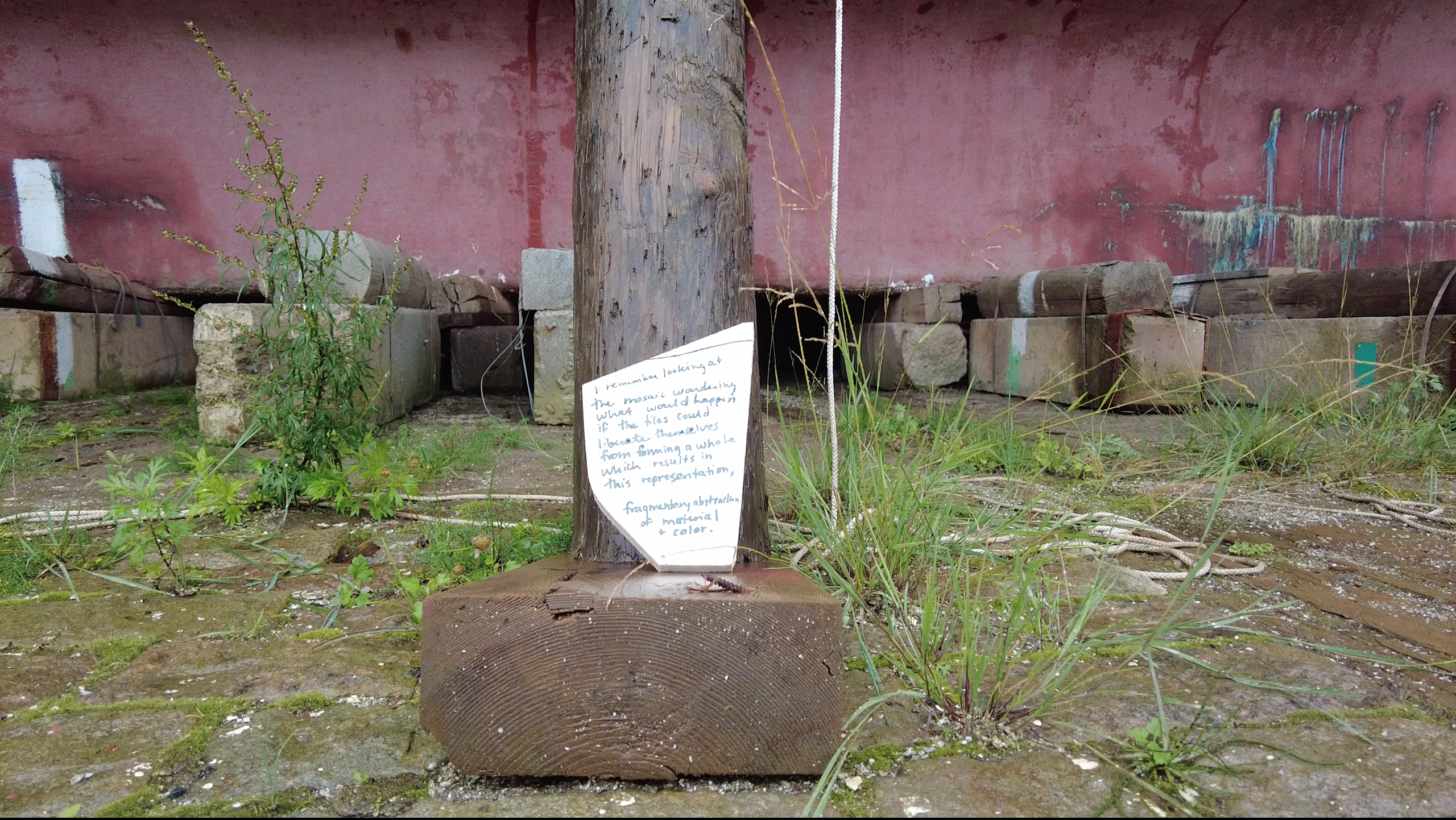
I placed the fragment N8 from the image of the ship in the viaporin dry-dock which is located in suomenlinna (Helsinki, Finland) and was built in 1751 to protect the swedish-Finnish archipelago fleet. On the day I visited, I was introduced to scrapping, meaning, fragmenting and taking ships apart so the constituents could find other purposes. I find my job in this project dealing with the image of the ship and its fragmentation and decentralization kin to a dry-dock worker.
A Workspace to Take the Whole Apart, November 2024
Group Exhibition as part of HIAP open studios
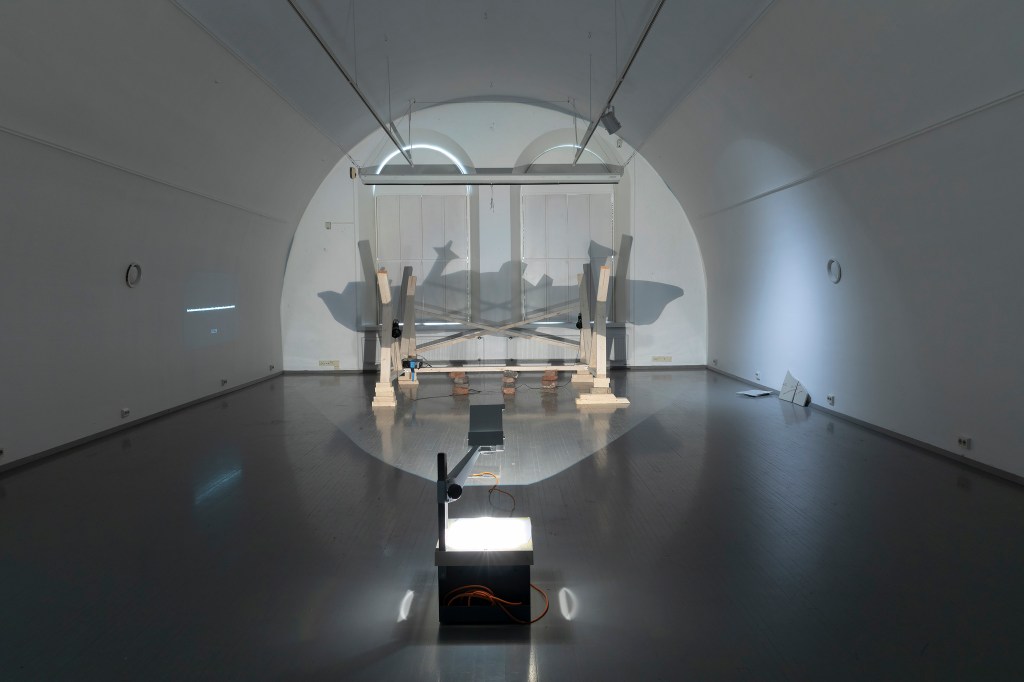
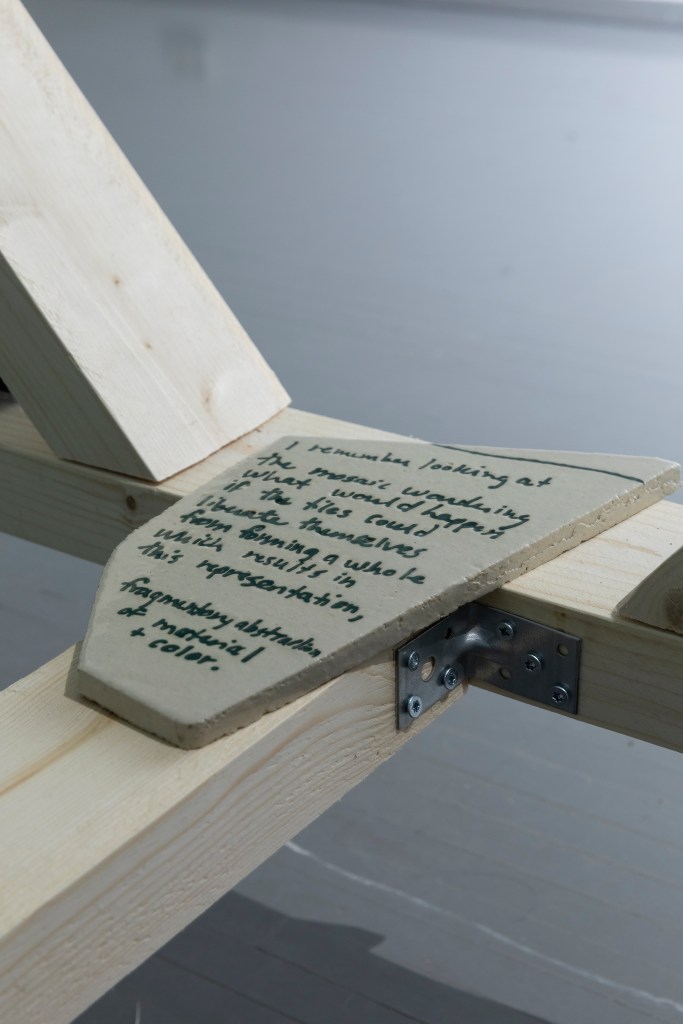
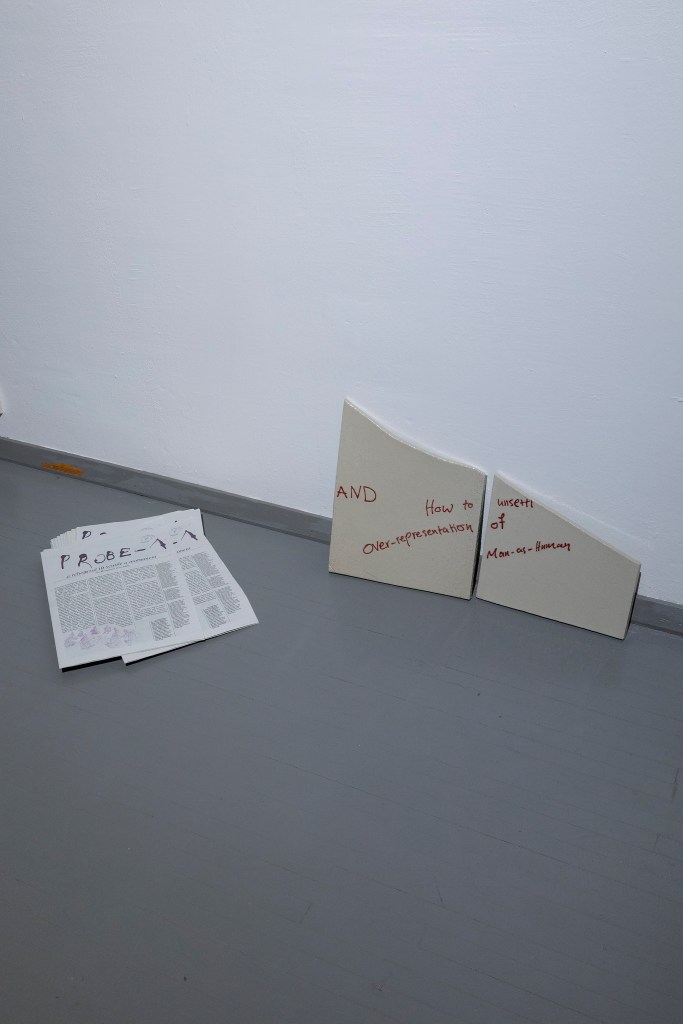
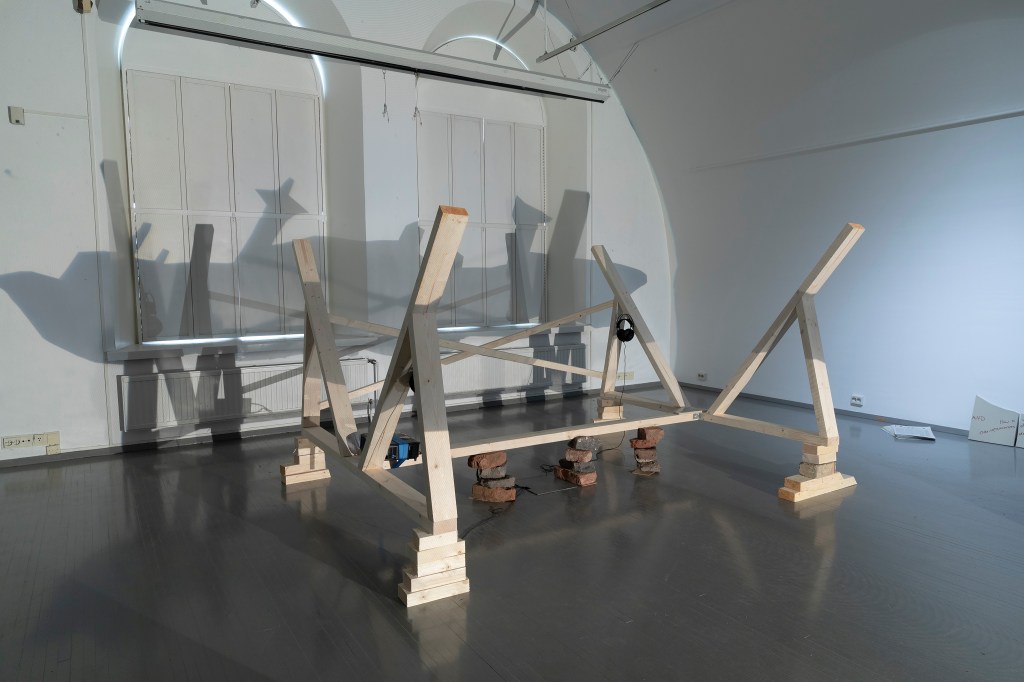
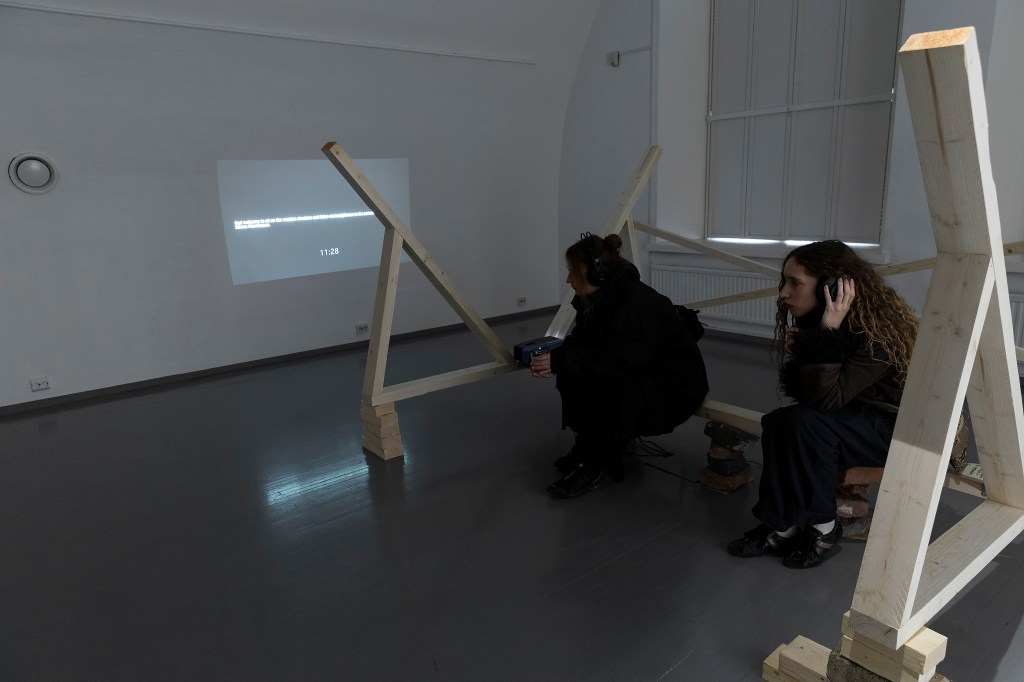
The installation features a wooden structure analogous to a ship stand found at the dry dock near HIAP studios. Visitors were invited to take a sit and listen via headphones to Farajnezhad’s conversation with local interlocutors including Ali Ali and Minna Henriksson, exploring a key question from Sylvia Wynter’s work: how to unsettle the over-representation of Man-As-Human. This installation is part of a larger project examining the colonial imagery embedded in the mural at central station Bremen deploying counter-archiving.
The Shadow of the image of the ship drawn from the mosaic mural in the central station Bremen is casted upon the the replica of the ship stand as if the structure is holding it. The installation is inspired by the practice of scrapping deployed in the dry dock to take the ships apart in order to repurpose the used material, yet the fragmentation in this work happens through the counter-archival method that Farajnezhad deploys through meeting, carrying the mosaics and recording conversations with local artists and researchers engaging with questions that mosaic poses. The over-writing of the image of the ship happened collectively as part of the workshop in May 2023 on paper and later transferred to mosaics together with Eghbal Joudi.

Dialogic session with Azadeh Sarjoughian, May 2024
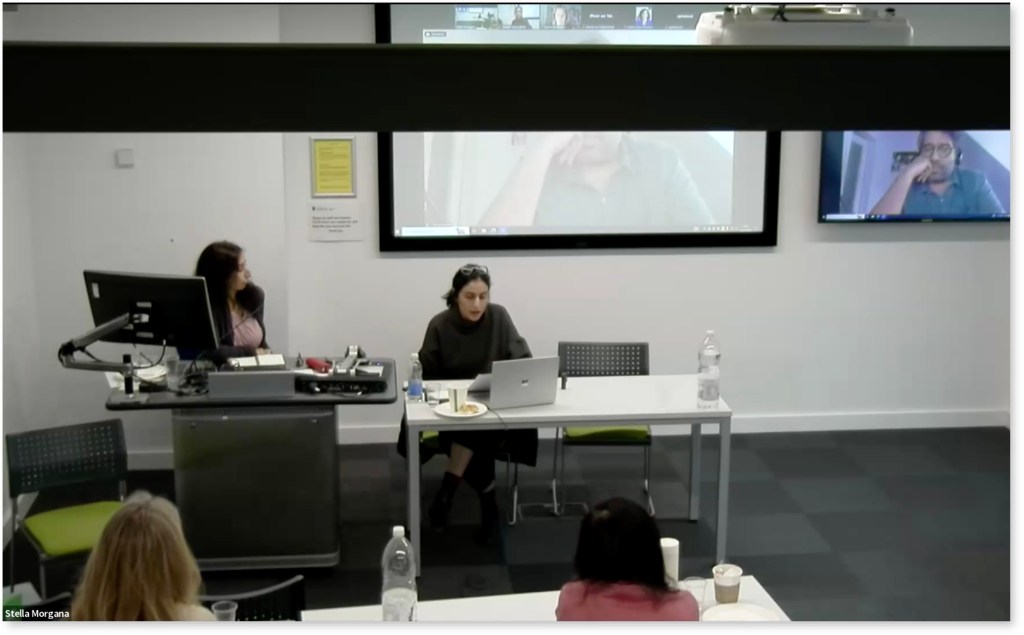
Lecture Performance at University of Liverpool
The lecture performance was held as part of HLC MENA Network Workshop – Spaces of difference: art and agency in the Middle East
The hybrid lecture performance was developed through a non-synchronized written dialogue with Dr. Azadeh Sarjoughian—an artist and researcher holding a PhD in Art History (College of Arts and Law-funded) and an MRes in Sexuality and Gender Studies, both from the University of Birmingham. Her work focuses on the intersection of geography and gender in the production and reception of contemporary art from or about the Middle East.
The dialogic lecture begins after a brief presentation by Aria, followed by Azadeh’s questions on Farajnezhad’s artistic methodology. The conversation then delves into the project series Beyond Undoing A Rediscovery. Throughout the lecture, notions such as counter-archiving, the living archive, the heterogeneous self, and diasporic perspectives that challenge German myopia are explored.
The Wreckage Of the Sunk Ship (Part one), May 2024
Exhibition and conversation with Sabine Broeck at Horner Eck
The artist looks at the colonial/racist imagery that is embedded in the mosaic mural at the central station Bremen. In May 2023, Farajnezhad began hosting workshops and discussions about the theme. These events encouraged people to over-write the image of the ship in the mural, which uncritically celebrates Bremen’s “innocent” overseas trade, a trade that greatly benefited from transatlantic slavery and colonialism. (photos taken by Sara Foester)
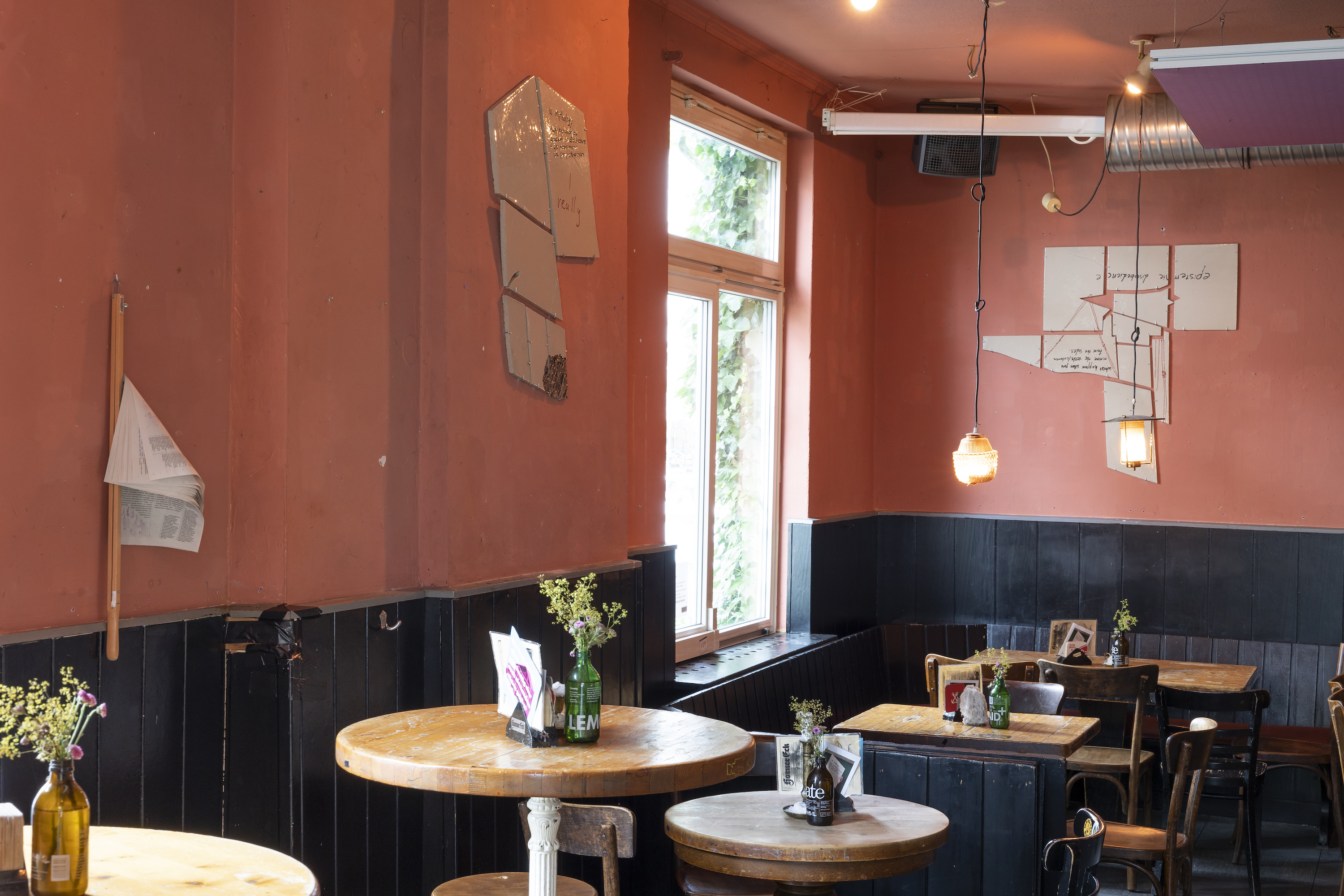
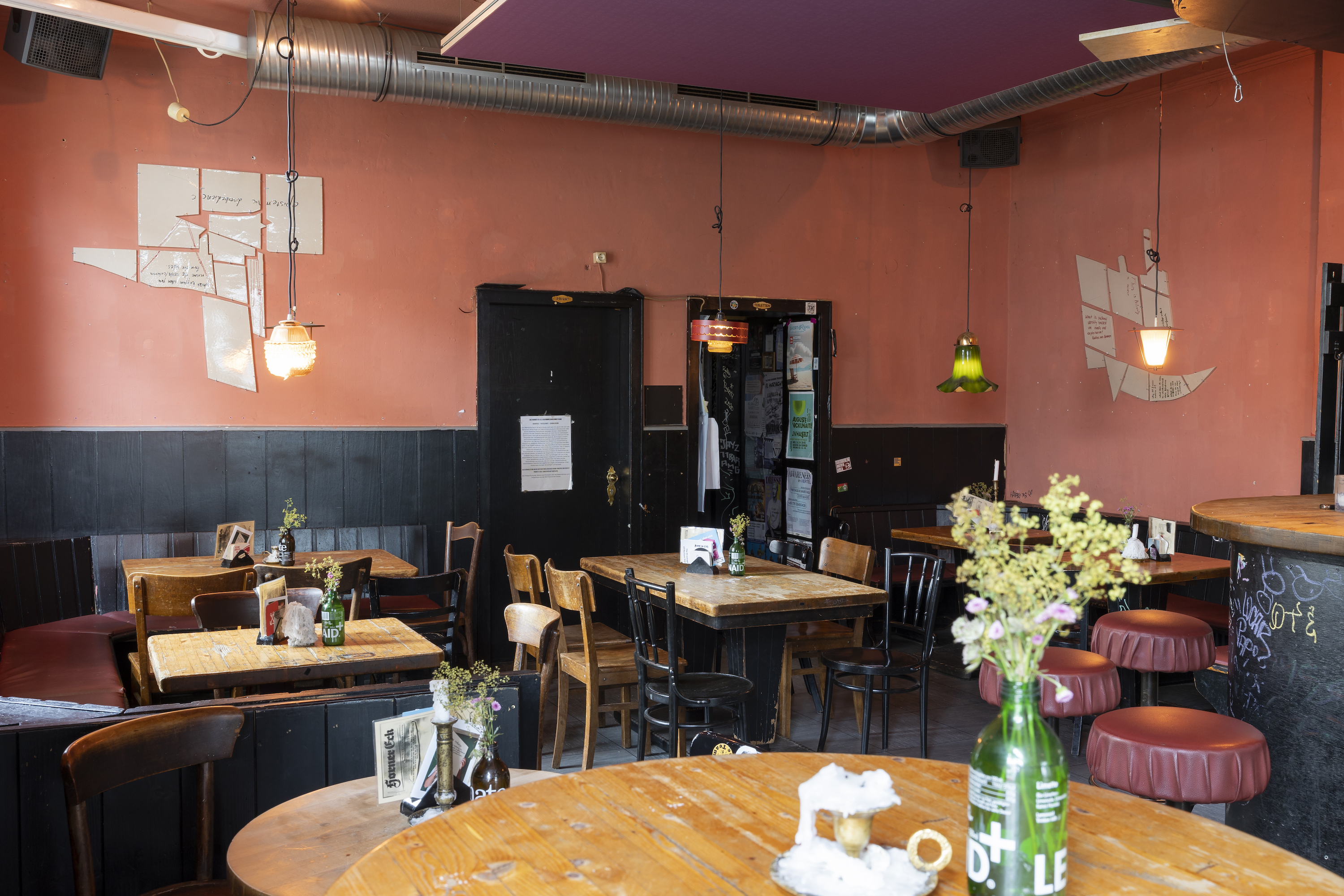
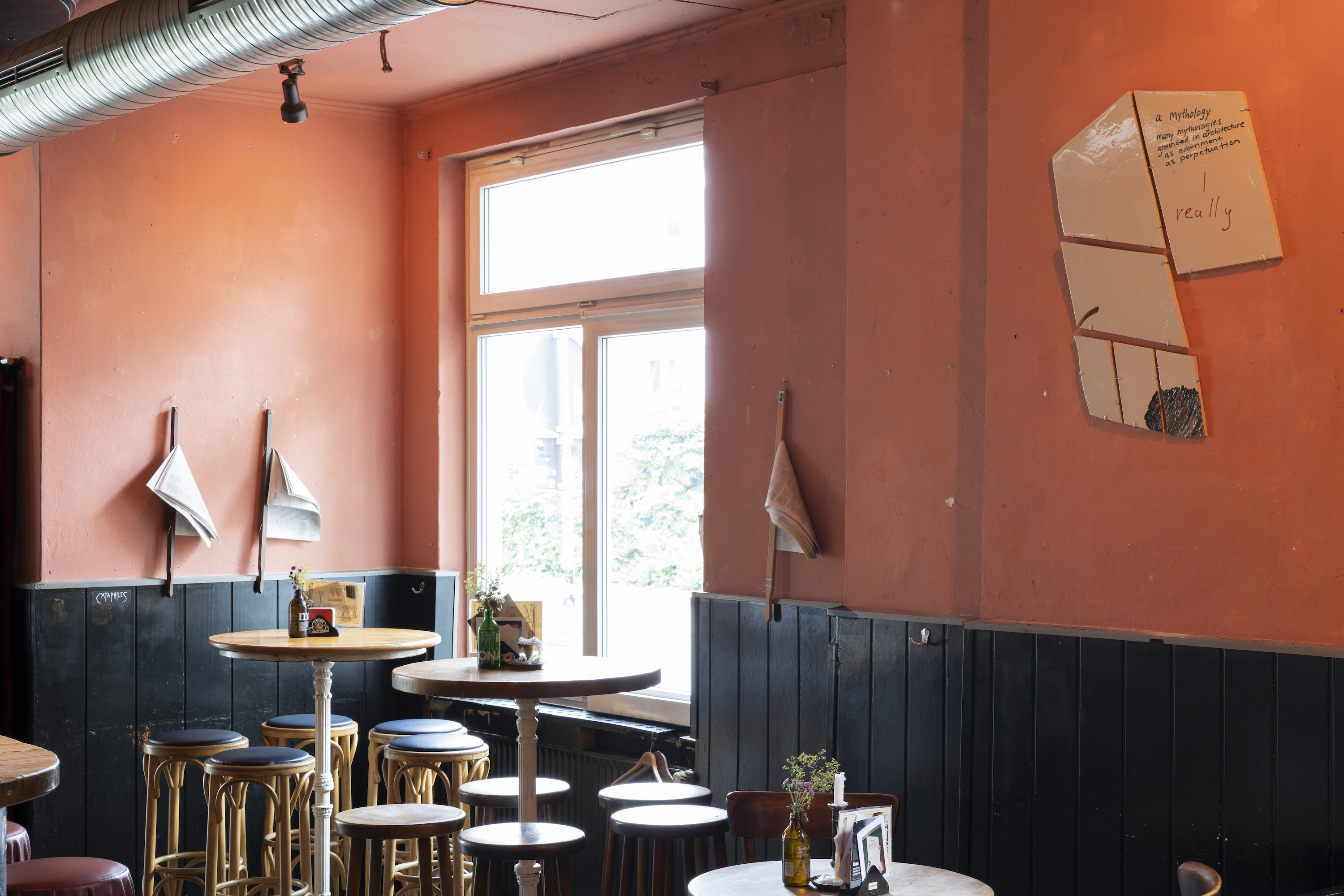
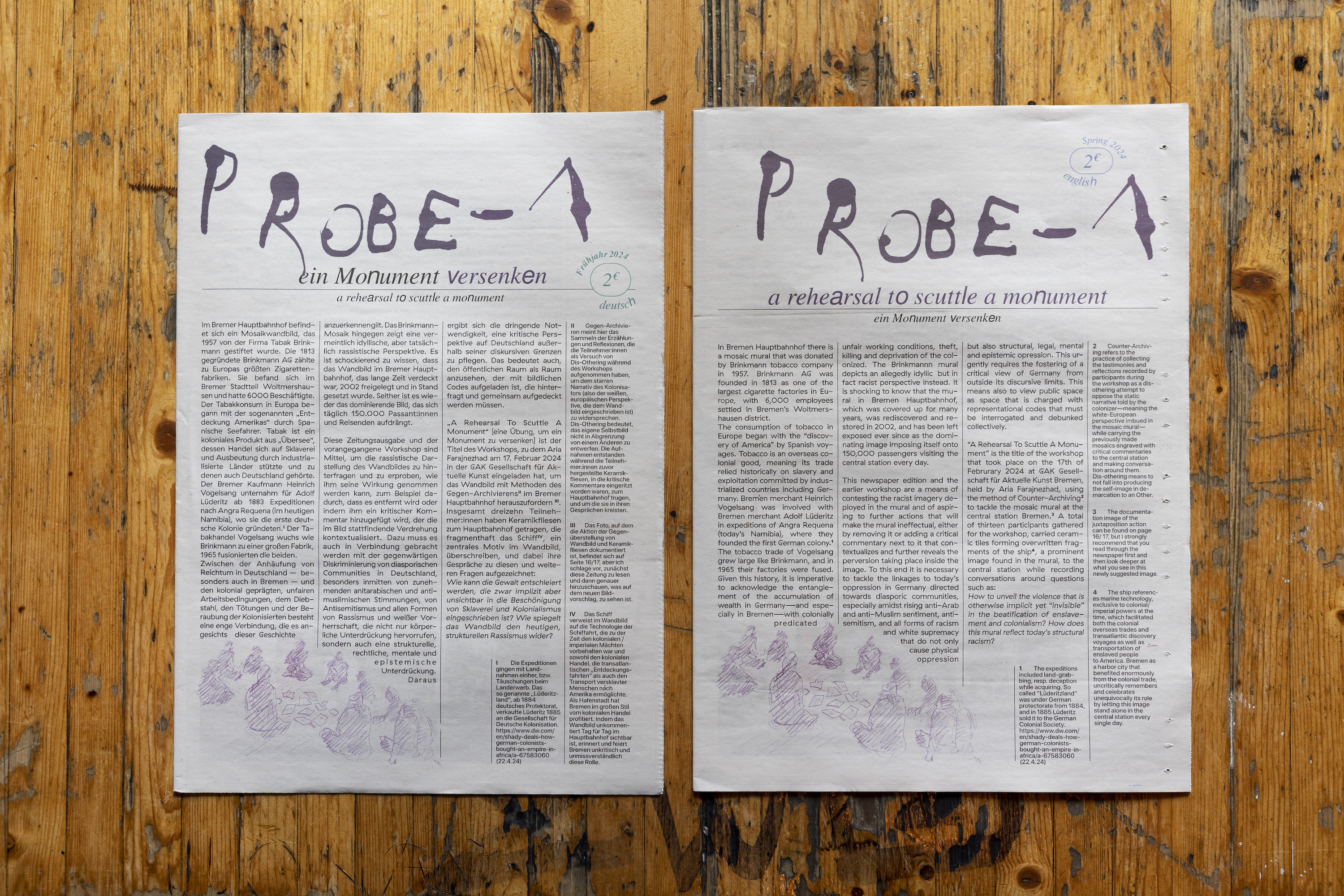
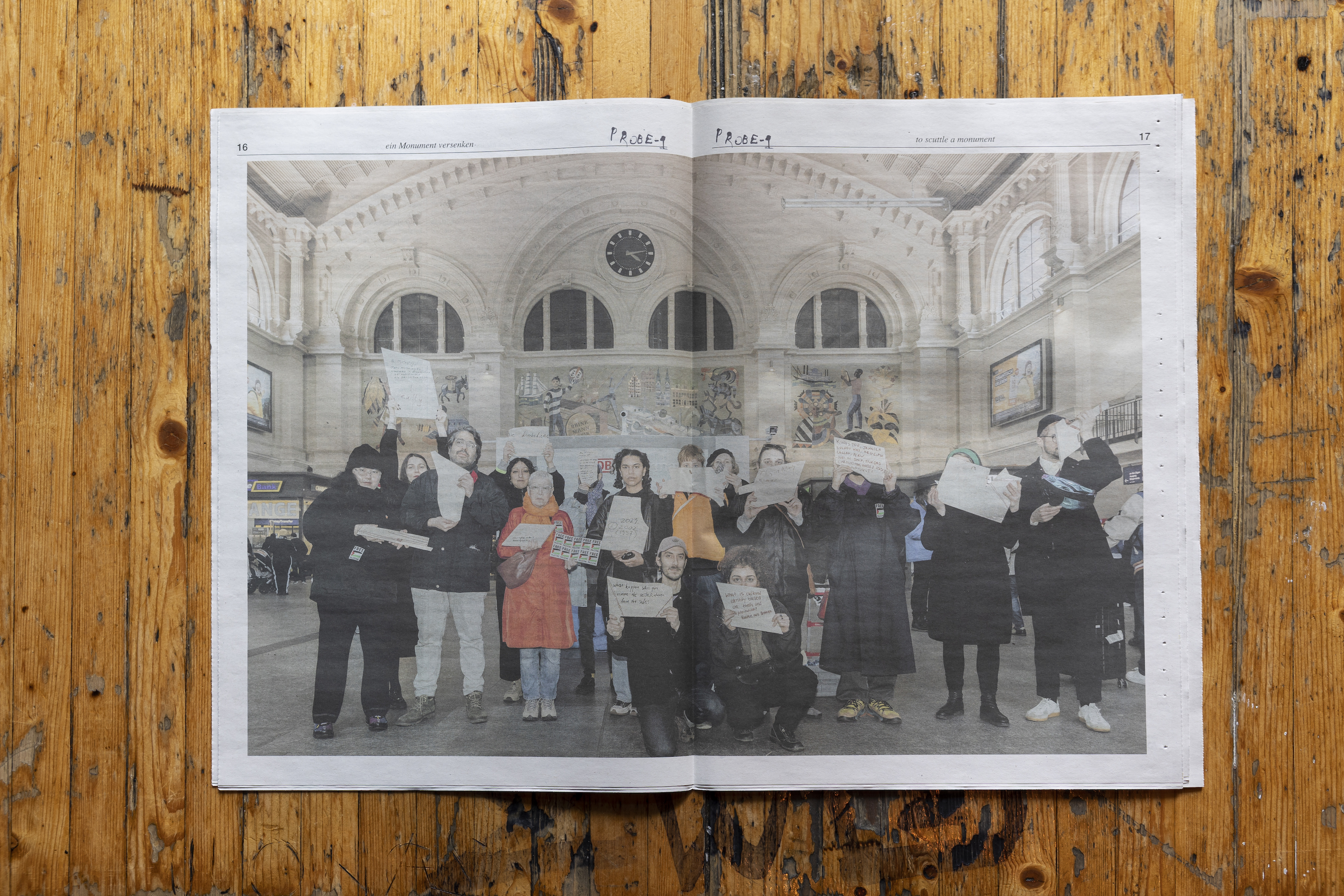
Together with Eghbal Joudi, Farajnezhad created 79 altered mosaic pieces, seven of which were discussed in the workshop “A Rehearsal To Scuttle A Monument” at GAK Bremen on February 17th, 2024. The conversations from this workshop were written down and published in the newspaper “Probe l: ein Monument versenken,” which is also available at the exhibition. Further editions are planed and supposed to be available at kiosks since the newspaper aims to connect critical discussions with the general public, reaching those who might not usually attend art events.
As part of the opening Farajnezhad was in conversation with the professor Dr. Sabine Broeck about her school project “The Fabric of Slavery: On the Traces of Transatlantic Enslavement in Bremen,” funded by the Robert Bosch Foundation. This discussion will compare the two projects, which happened almost ten years apart, and explore what actions can be taken concerning Bremen’s historical involvement in transatlantic slavery and how to deal with its lasting impacts today. (Photo taken by Youngji Cho)
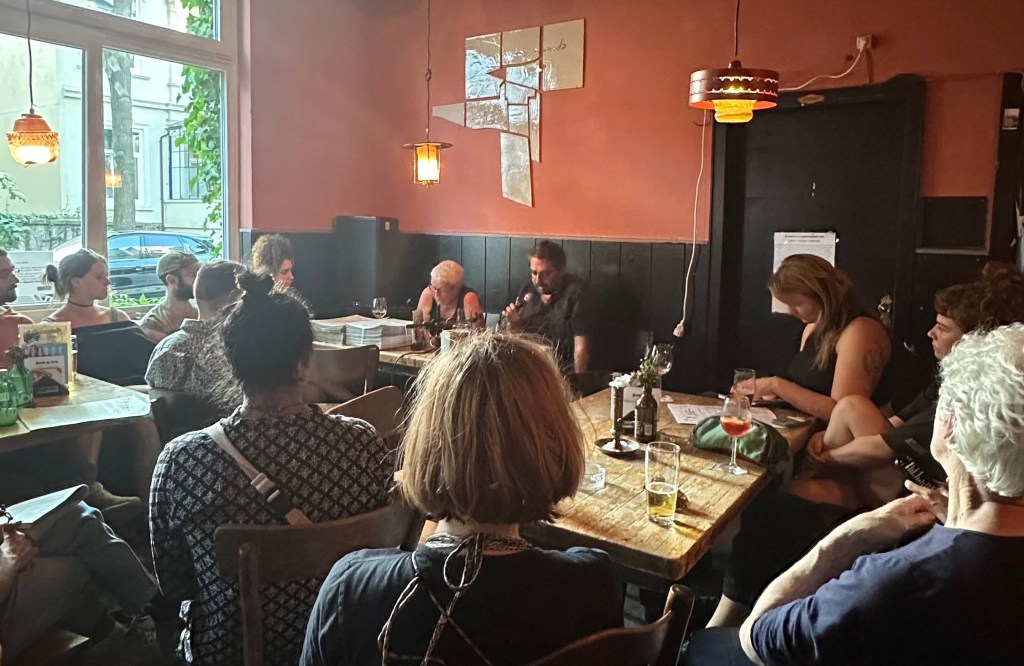
Professor Dr. Sabine Brock used to teach at the University of Bremen, focusing on how race, class, gender, and sexuality intersect, and the ongoing impact of white dominance and anti-black violence. She has been a retired professor since October 2020. Her work critiques the lingering anti-black colonial attitudes stemming from transatlantic history, especially in Western culture.
Beyond Undoing A Rediscovery (Part two), March 2024
Exhibition as part of 47. Bremer Förderpreis für Bildende Kunst
79 ceramic tiles(in cooperation with Eghbal Joudi, with support from Gaurav Talekar
and Ute Alexandra Fischer), Audio, 10:00 Min., (with Eghbal Joudi,
Youngji Cho, Iulia Radu, Helena Otto, Farzad Golghasemi and Tabea Erhart)
read a short text by Ingmar Lähnemann about the project. (page 7-8)
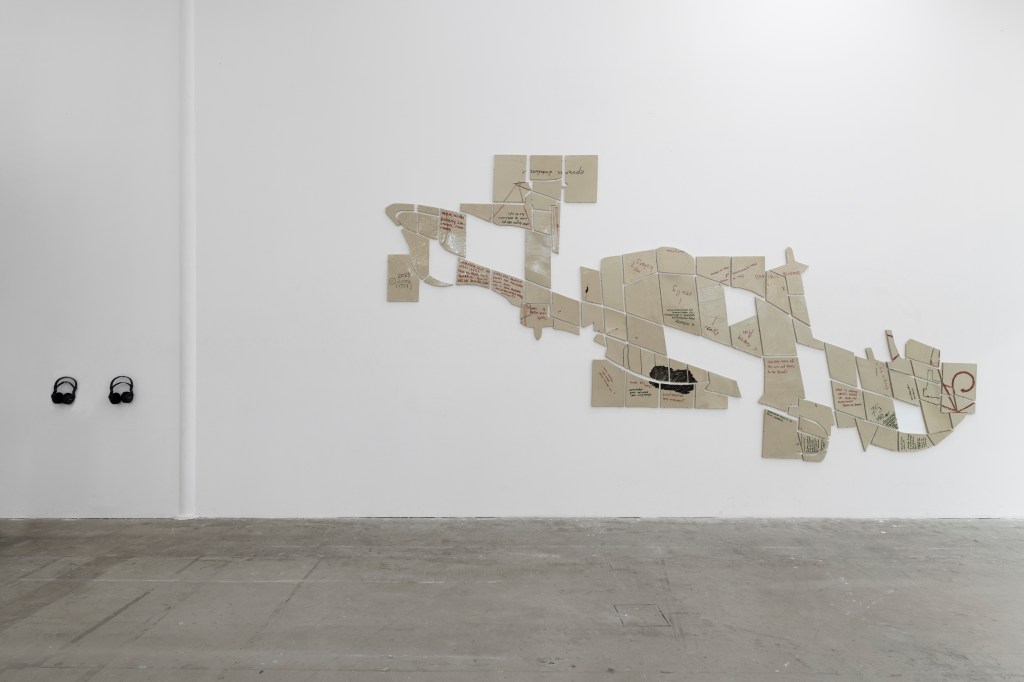
Photo By: Jens Weyers
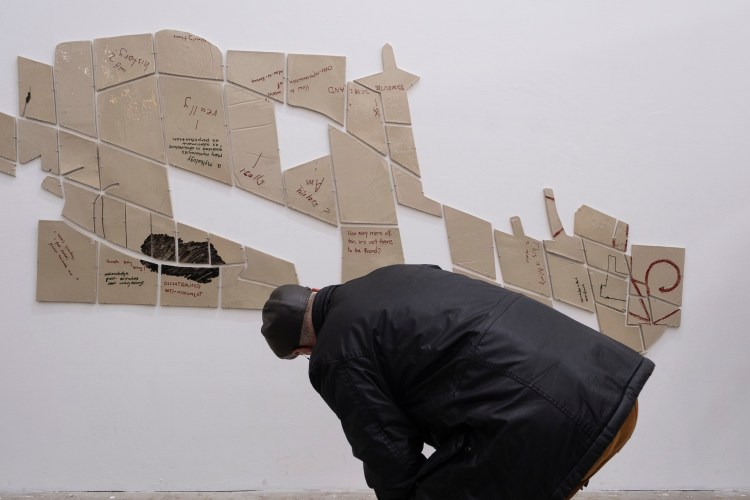
Photo By: Chul Gyun Yoo
A Rehearsal To Scuttle A Monument, February 2024
Workshop at GAK Gesellschaft für Aktuelle Kunst
A Rehearsal To Scuttle A Monument is the next attempt to pick up on this effort: During two workshops that Aria Farajnezhad held in May 2023, the participants engaged collectively in over-writing, -drawing, folding and reshuffling the image of the vessel that features prominently in the mosaic, to intervene into the image and render visible the context that is otherwise erased, and to oppose amnesia and more so the perpetuation of colonial role-allocation (inferior/superior) which has benefitted Bremen through tobacco, cotton, and coffee trade and has left its echoes until very today. Afterwards and in collaboration with Eghbal Joudi, Farajnezhad began transferring this initial intervention on paper into ceramics, back to the original material of the mural. A Rehearsal To Scuttle A Monument sets out to take these reconfigured mosaics collectively to central station, engage in conversations about how to counter the monohumanist view embedded in images found in the public space and enter into an act of juxtaposing them with the mural in the central station.
There is a Newspaper in the making that features a selection of the recordings which have been produced during the workshop.
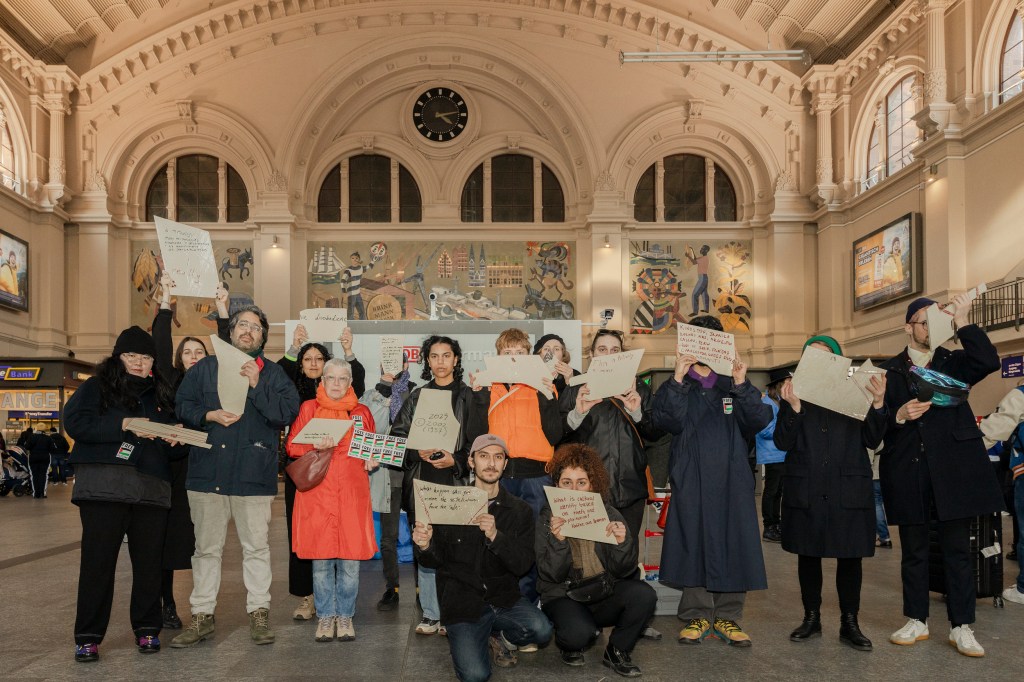
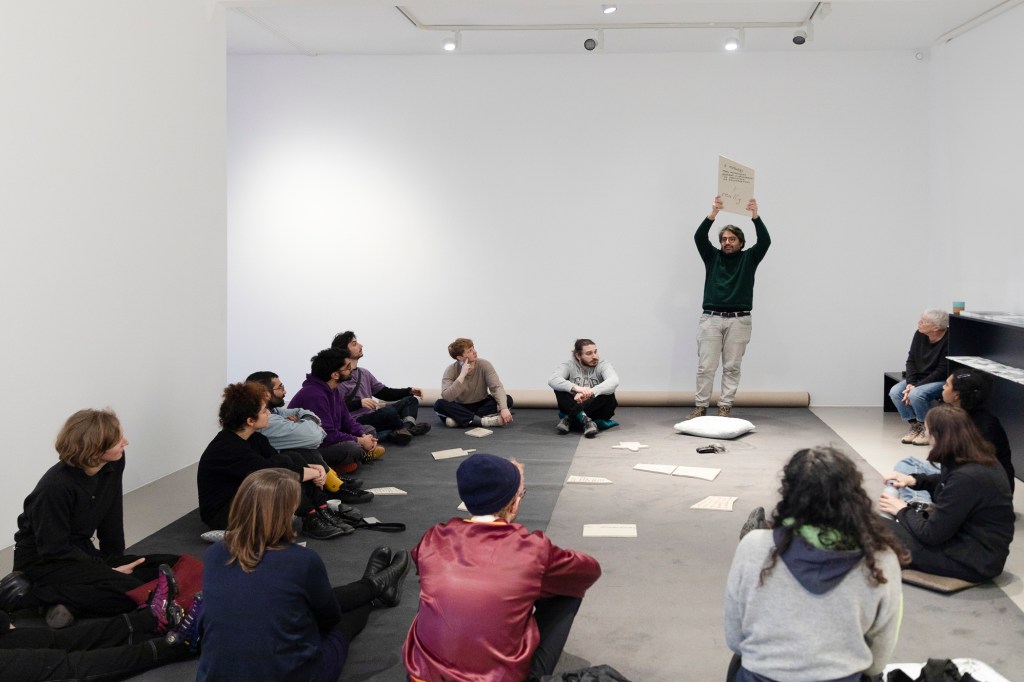
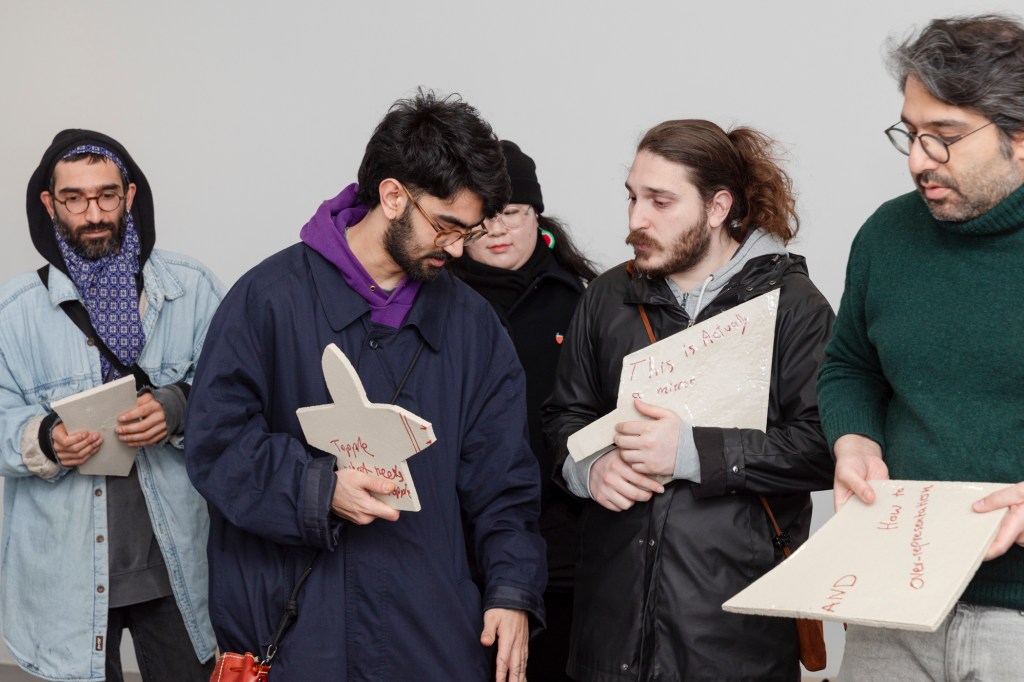
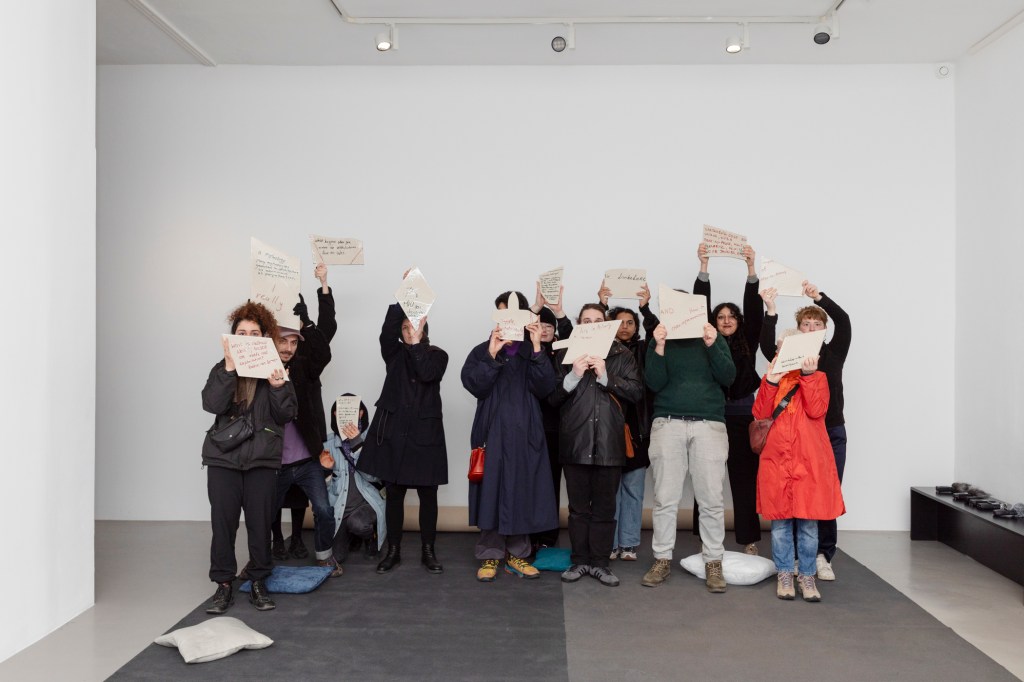
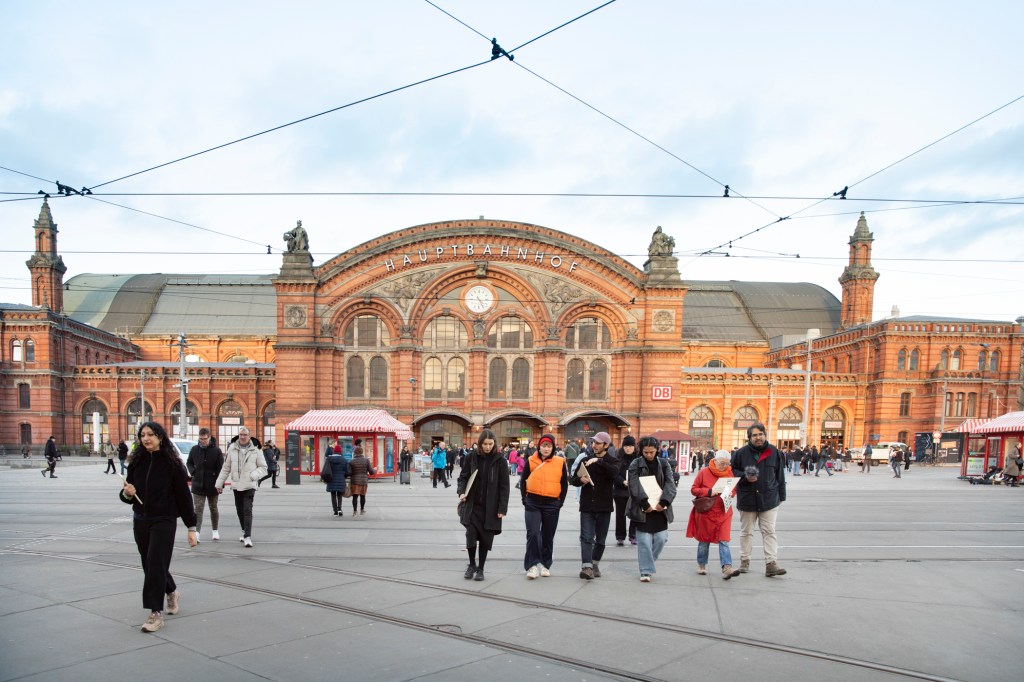
Photos by: Jiye Lee
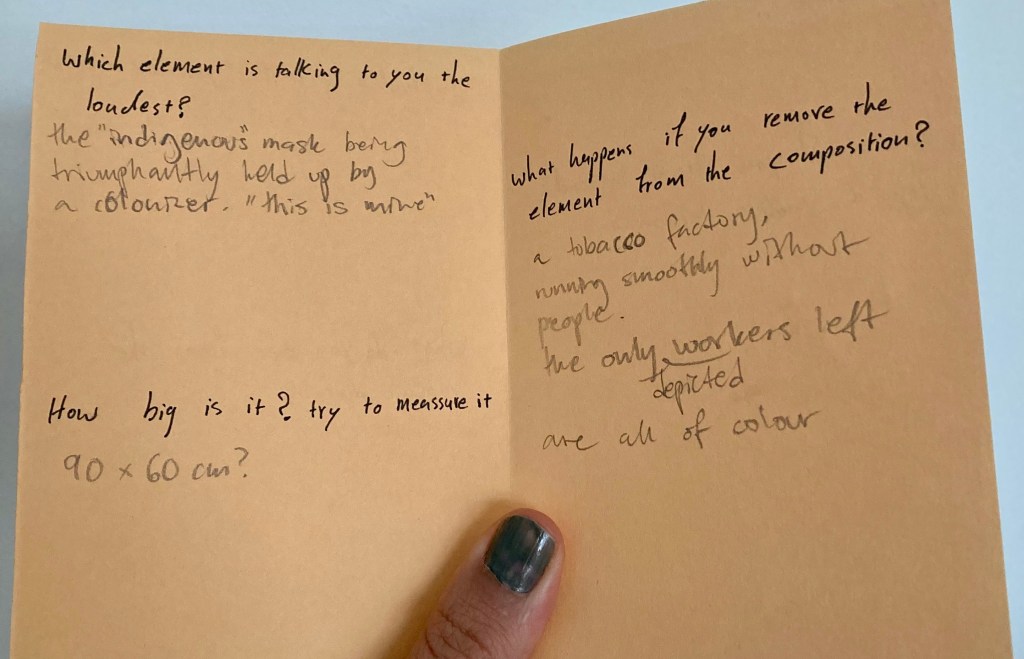
read below “a Score or Rather a Set of Questions” written before the workshop above, designed by Melis Sivasli. Published by Circa 106 as part of Common_s Knowledge_s residency program.
Mosaic Speaking: I feel dead, please animate me, September 2023
Conversation series, published on SoundCloud
in conversation with Gleb Amankulov, Mika Maruyama, Nour Shantout, Alexandra Tatar, and Rojda Tugrul
Following the two workshops and collective intervention to the racist imagery of the mosaic mural located in the Bremen central station which took place under the title “Beyond Undoing a Rediscovery” with the help of AIR InSILo, Aria Farajnezhad turned five of the reconfigured mosaic pieces of the image of the vessel into their original material, meaning ceramics. He takes these five ceramic pieces which were produced in collaboration with Eghbal Joudi and with the support of Ute Alexandra Fischer and Gaurav Talekar to Hollabrunn.
conversations depart from the mosaics themselves and touch on topics such as internal/auto colonization, visibility, erasure/covering and amnesia, hybrid subjectivity and refusal.
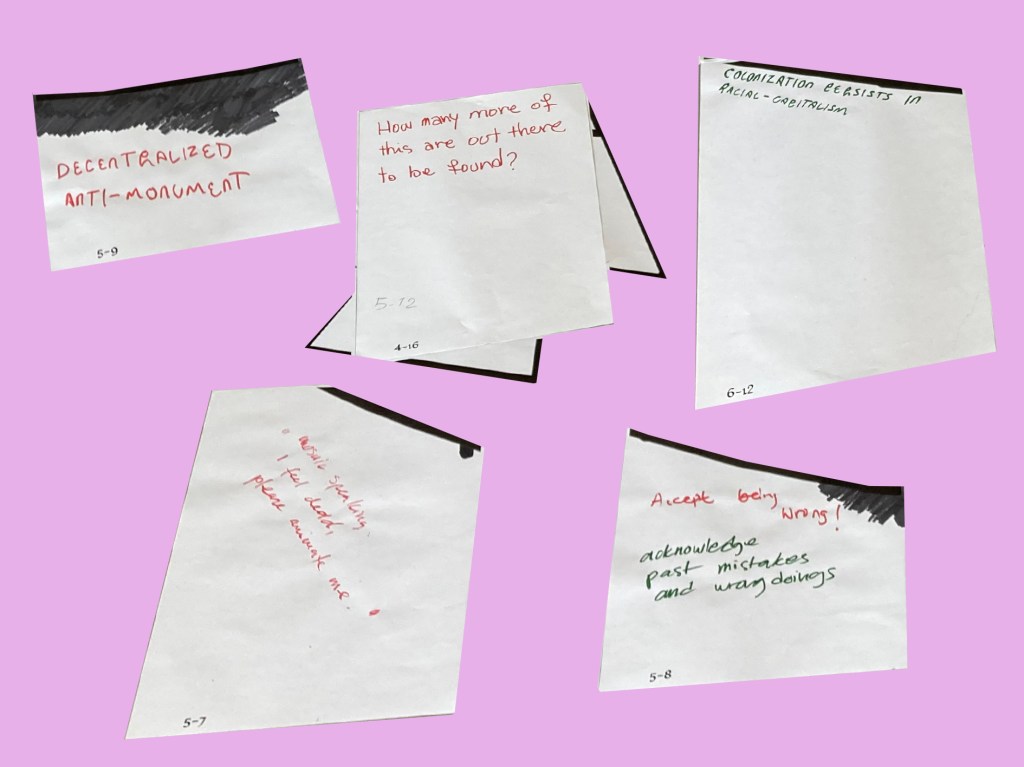
Beyond Undoing A Rediscovery (Part one), May 2023
Workshop at Circa 106 and Weserburg Museum
AKA Mehr als die Rückgängigmachung der Wiederentdeckung
‘Beyond undoing a rediscovery’ is a reading performance plus collective intervention in the Mosaic mural imagery at Bremen Central Station that was rediscovered in a 2002 renovation project and has been exposed ever since. The performance reflects upon an encounter with the mural, through drawing from Sylvia Wynter’s take on 1492 that locates an epistemic shift from the medieval Christian theology that centers rational European man, and invites everyone to propose an otherwise image that is not perpetuating the colonial role allocation to oppose its harmful imagery through the act of collective over-writing/drawing.
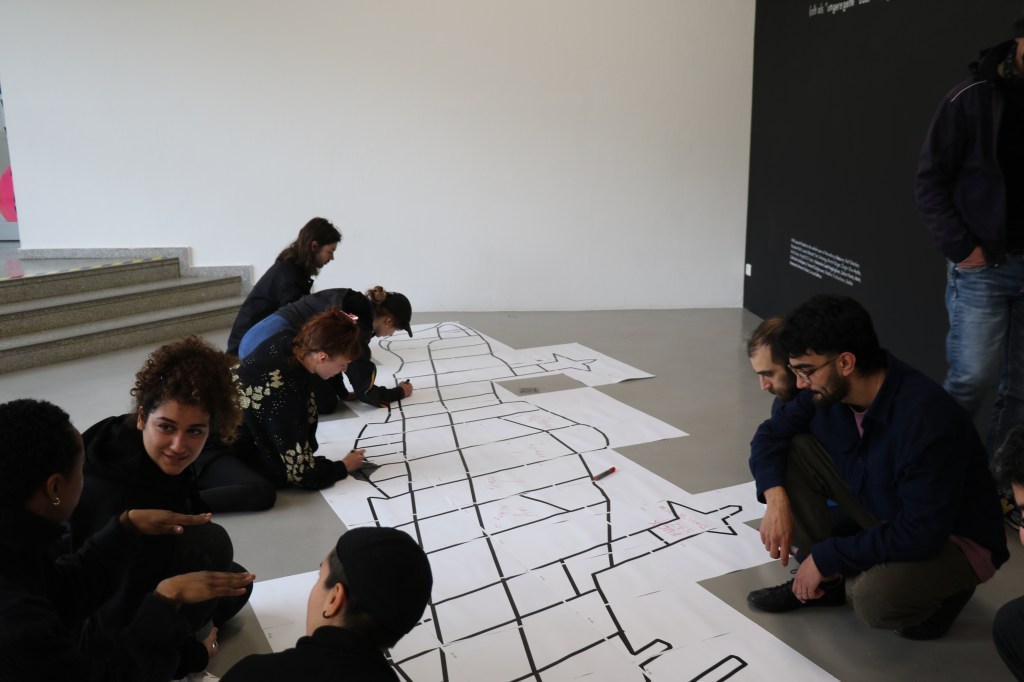
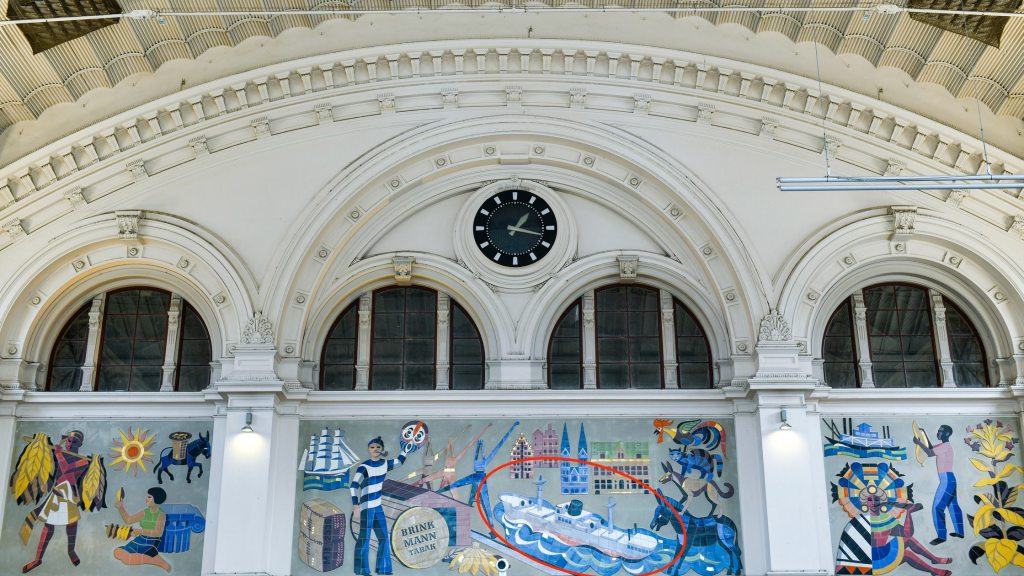
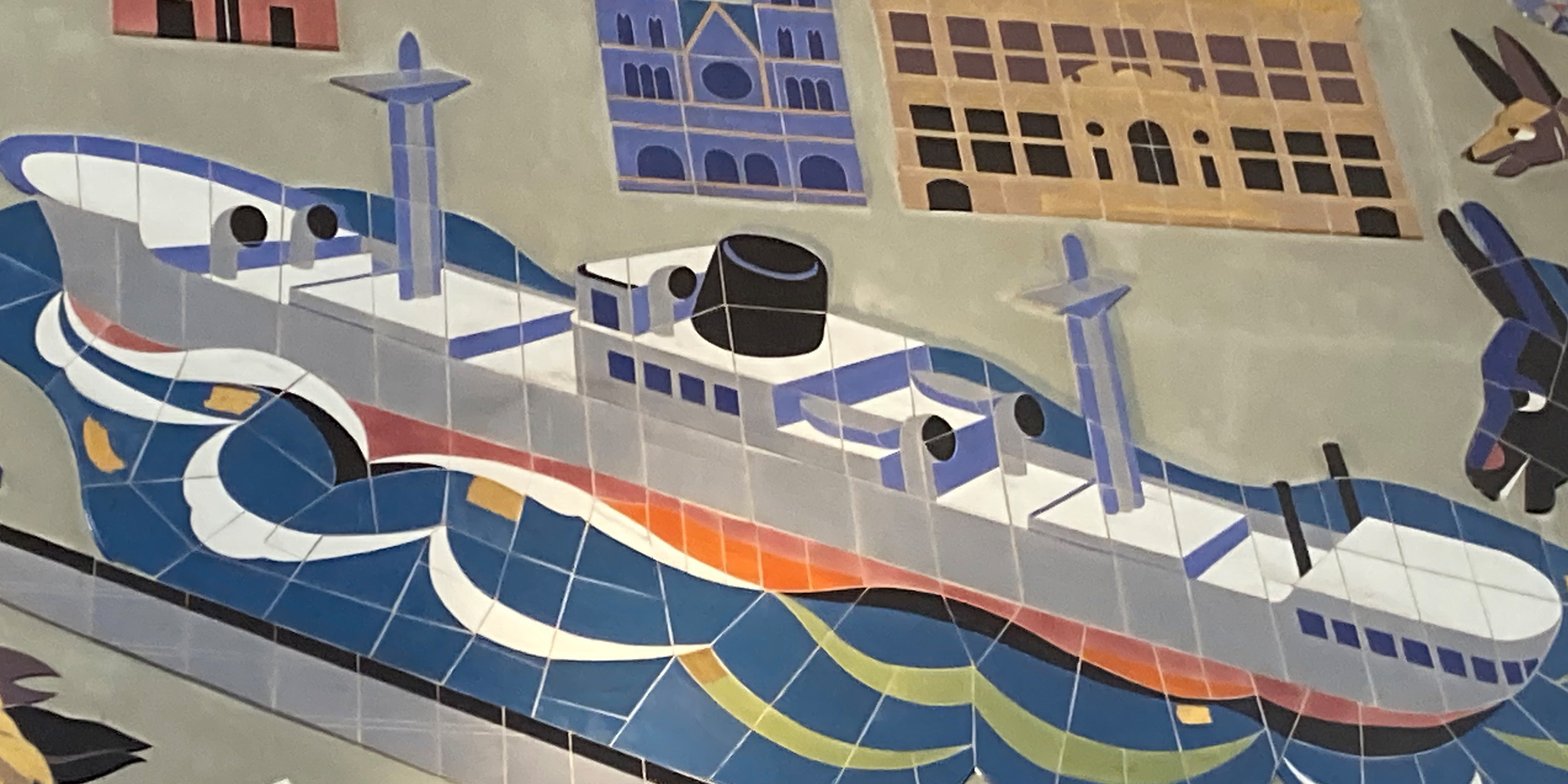
The event started with the reading performance of the text below while trying to reenact the parts of the text that are written from a first-person point of view in Bold. afterward, there is an invitation which was hosted by the collective exhibition Lacuna Inside a Dumpling at Weserbug Museum in Bremen to overwrite the image of the vessel which is being printed roughly in the actual size and laid on the ground. The mural is being donated by the Brinkmann tobacco company celebrating and glorifying Bremen’s colonial role in the exploitation, expropriation, slave labor and etc. worth mentioning that tobacco consumption in Europe dates back to the “discovery” of America in 1942. There were excerpts from the research fragmented in the colorful A3 meant to provide ingredients that could inform collective intervention to the mural imagery.
Link to the Essay “Why did I linger upon the vessel the longest?”:
Link to the documentation (excerpt) of the first day:
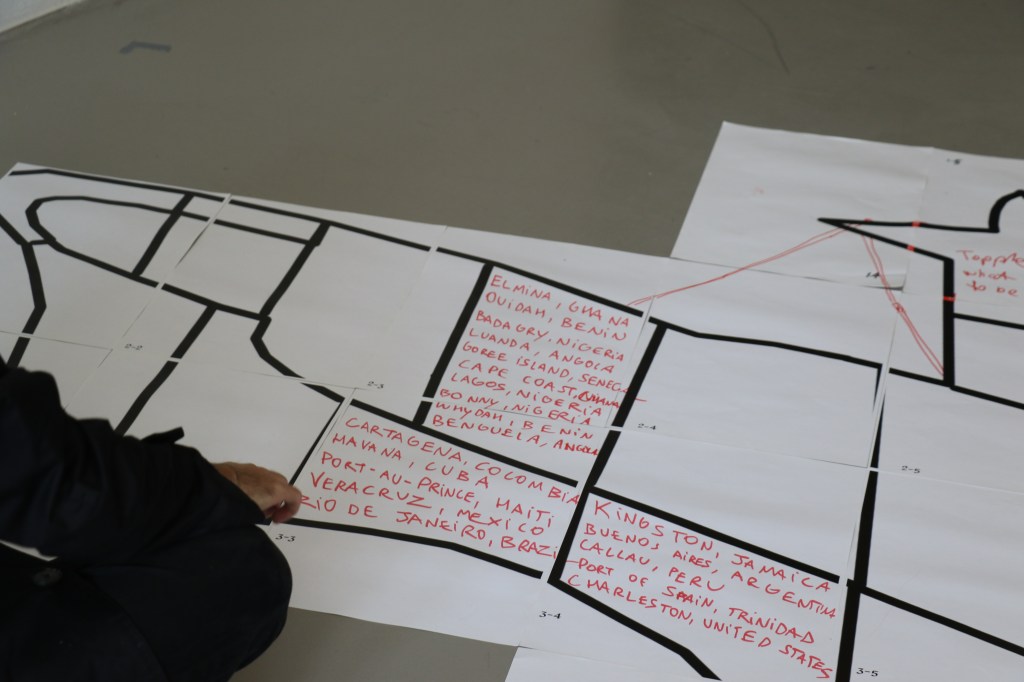
The second day of the workshop the ‘Beyond Undoing a Rediscovery’ was comprised of a city walk, group reading, and the second collective intervention in the Mosaic mural imagery at Bremen central station that was rediscovered in the 2002 renovation project and kept exposed ever since. The workshop which was hosted by the Circa106 project space within the Common_S Knowledge_S residency program picks up on the first intervention that took place as part of Lacuna: inside a Dumpling activation program in Weserburg Museum on the 7th of May and tends to reflect upon and correspond to the entanglement of colonial trade and the 1492 “voyages of discovery” both constitutive of an epistemic ground that perpetuates colonial role allocation that is imbued in today’s Bremen cityscape.
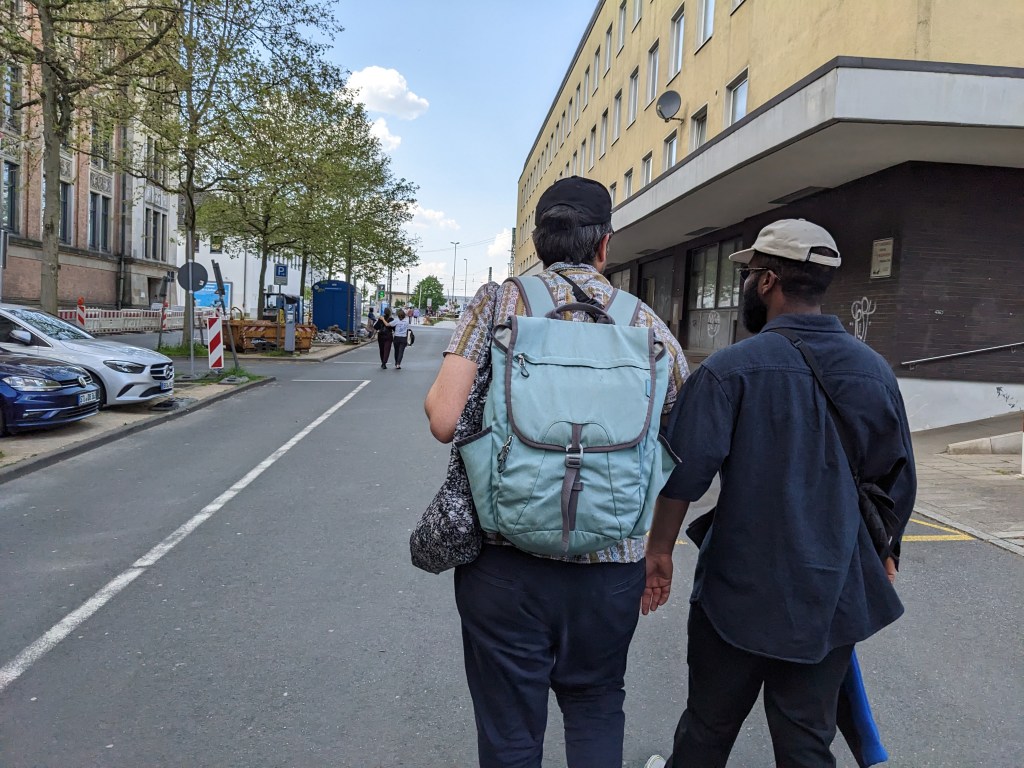
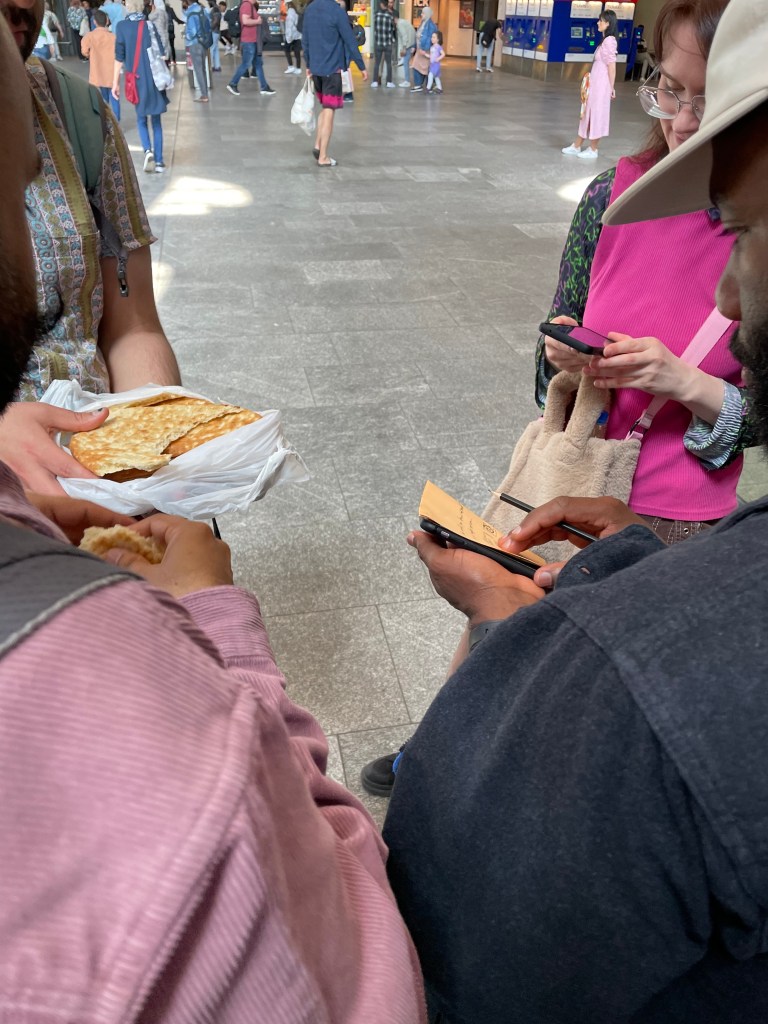
during the walk, the group was divided into pairs, in which one person remains their eyes closed but is allowed to speak to describe the soundscape they are exposed to whereas the other person who is guiding them should refrain from speaking. The participants are encouraged to practice trust and activate their senses on the way to the central station where they are given a score and pencil to spend time with the mural around questions pertaining to the recognition of the violence in the image and imagining the otherwise.
 Aria Farajnezhad