Exhibition at Kunstverein Hannover
Partially glazed ceramic reliefs and engraved ceramic text panels, painted wooden wall panels, publication.
The Flowers Devoured What They Were Meant For is a research-based project that brings together two connected sites: the Berlin–Baghdad Railway and the former Hanomag Kanonenwerkstatt in Hannover. The project began through joint research with Larissa Araz at Kulturakademie Tarabya in Istanbul in 2025 and expanded through archival research at the Deutsche Bank Historical Archive in Frankfurt and in Hannover.
Following the circulation of locomotives, capital, military infrastructure, and labour between these sites, the project examines how the deportation of Armenian workers during the Armenian Genocide entered German administrative records as a problem of railway logistics. At the same time, it considers how the partnership with the Ottoman Empire and the assertion of technological domination were celebrated through floral motifs whose forms, estranged from the architectural language around them, testify to an Orientalizing gaze that produces a docile image of the Orient.
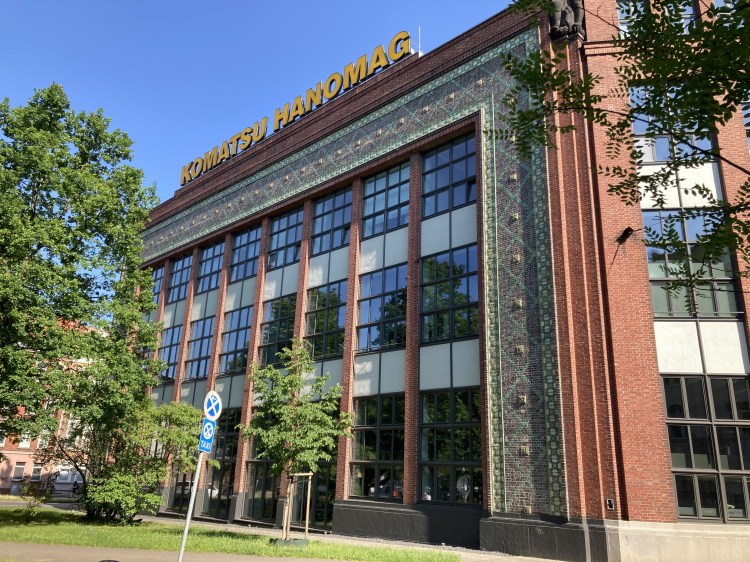
The façade of Hanomag’s former Kanonenwerkstatt in Hannover-Linden, built during the First World War. Ornamental flora frames images of the factory’s products.
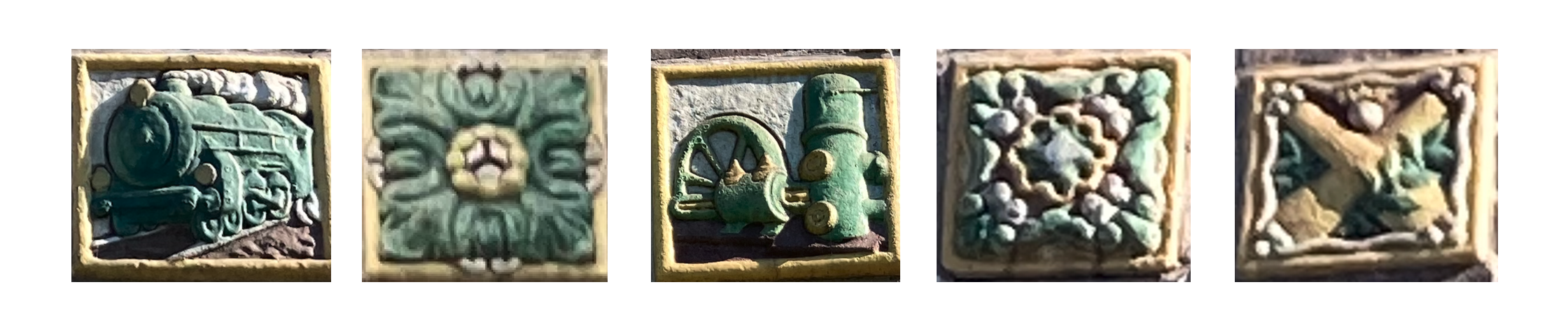
On the façade, ornamental floral motives are forming a decorative skin for industrial and military production. Hanomag’s connection to the Baghdad Railway was not merely symbolic: a wartime issue of the company magazine states that the manufacturer had supplied more than eighty locomotives to the Ottoman Empire, including to the Baghdad, Anatolian, Oriental, and Hejaz railways.
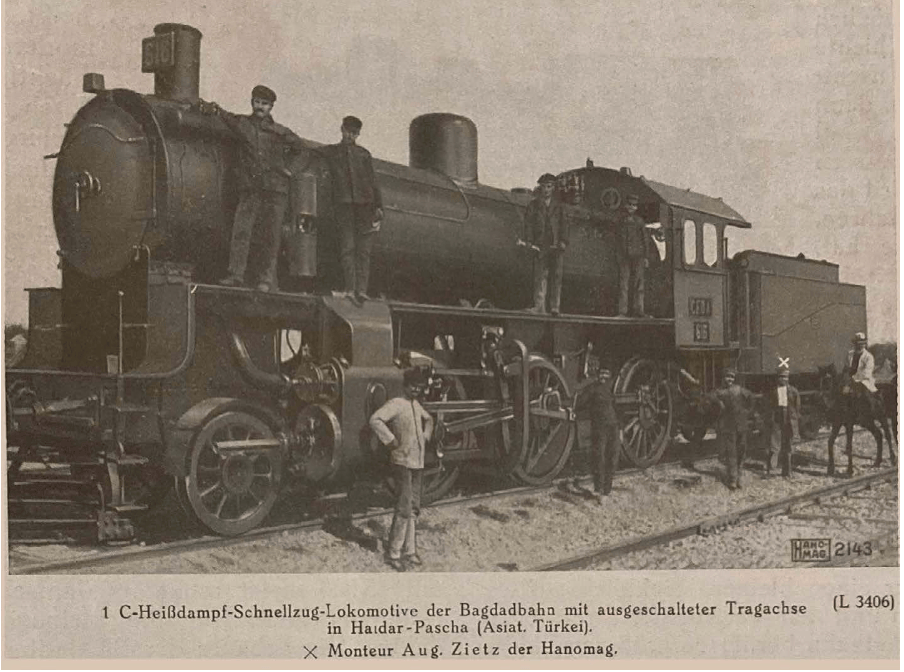
Victor Ottmann, “Die Bagdad-Bahn,” Kriegs- Beilage der Hanomag-Nachrichten, supplement to issue 3,
1916, pp. 43–46. Stadtarchiv Hannover, Zs 32.
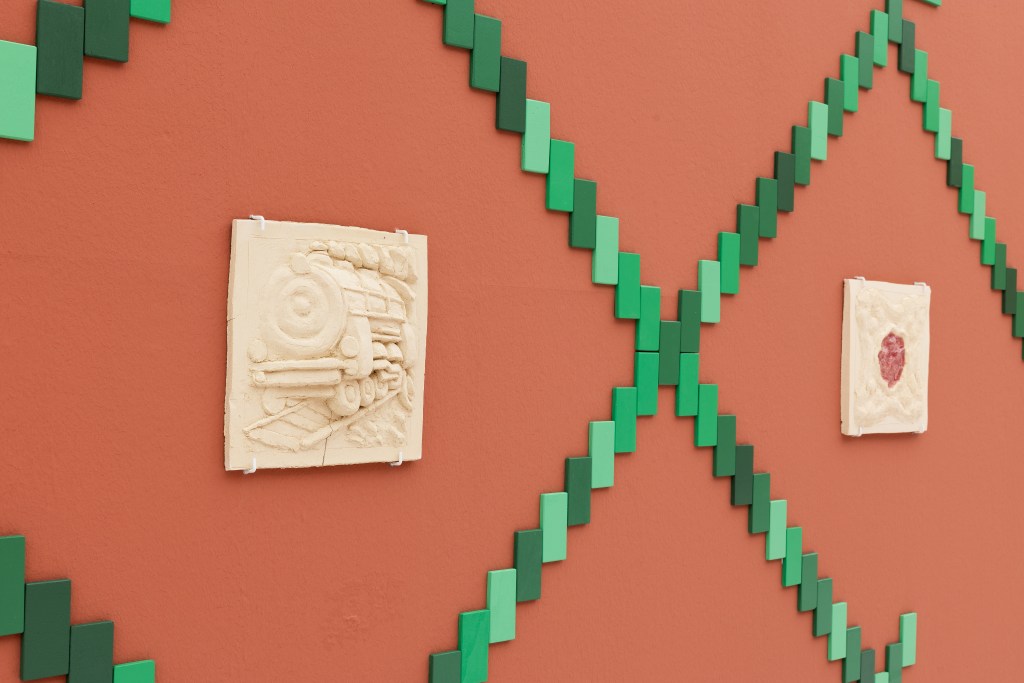
Photograph: Andre Germar
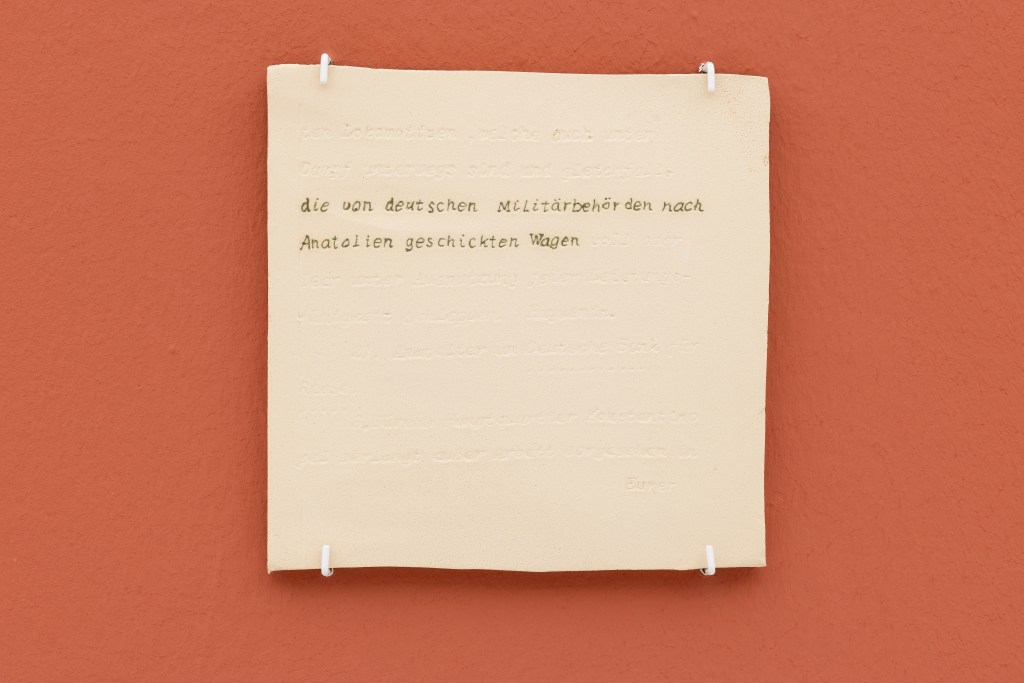
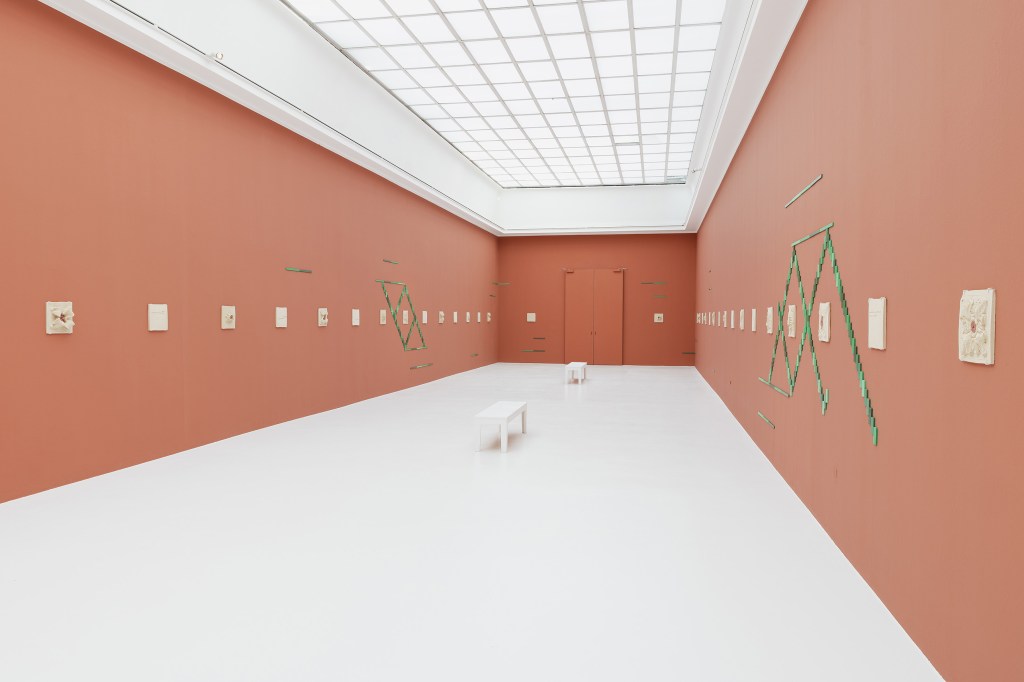
In the installation, newly produced ceramic panels mimic the tile grid of Hanomag’s former Kanonenwerkstatt. While the product images of the original façade are largely replaced by excerpts from telegrams dating from 1916, the three original motifs—the locomotive, steam engine, and cannon—each appear once within the sequence. They function as points where the visual traces of the Hanomag façade become most concentrated.
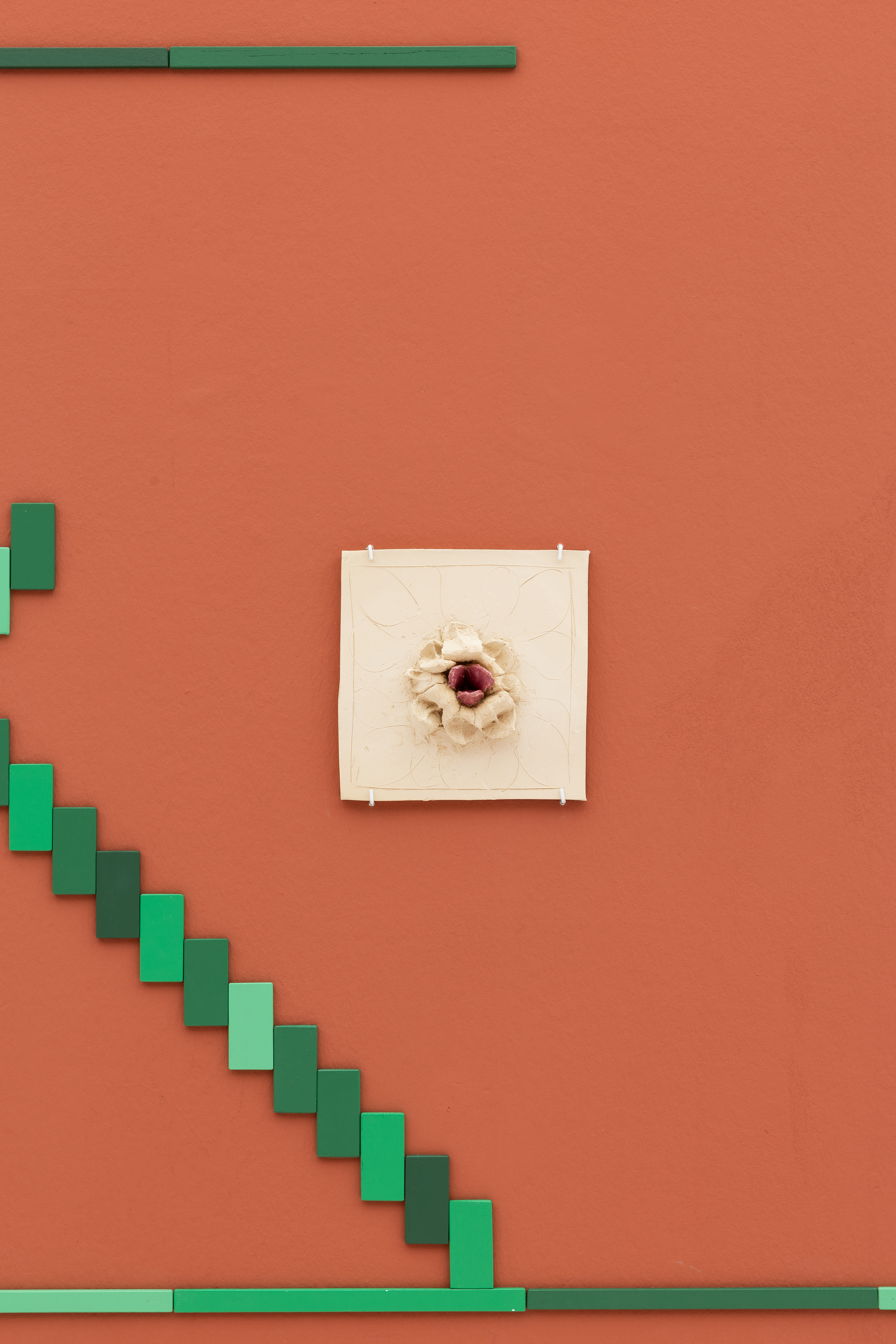
The Flowers Devoured What They Were Meant For, Installation view, Kunstverein Hannover, 2026. Photograph: Andre Germar. 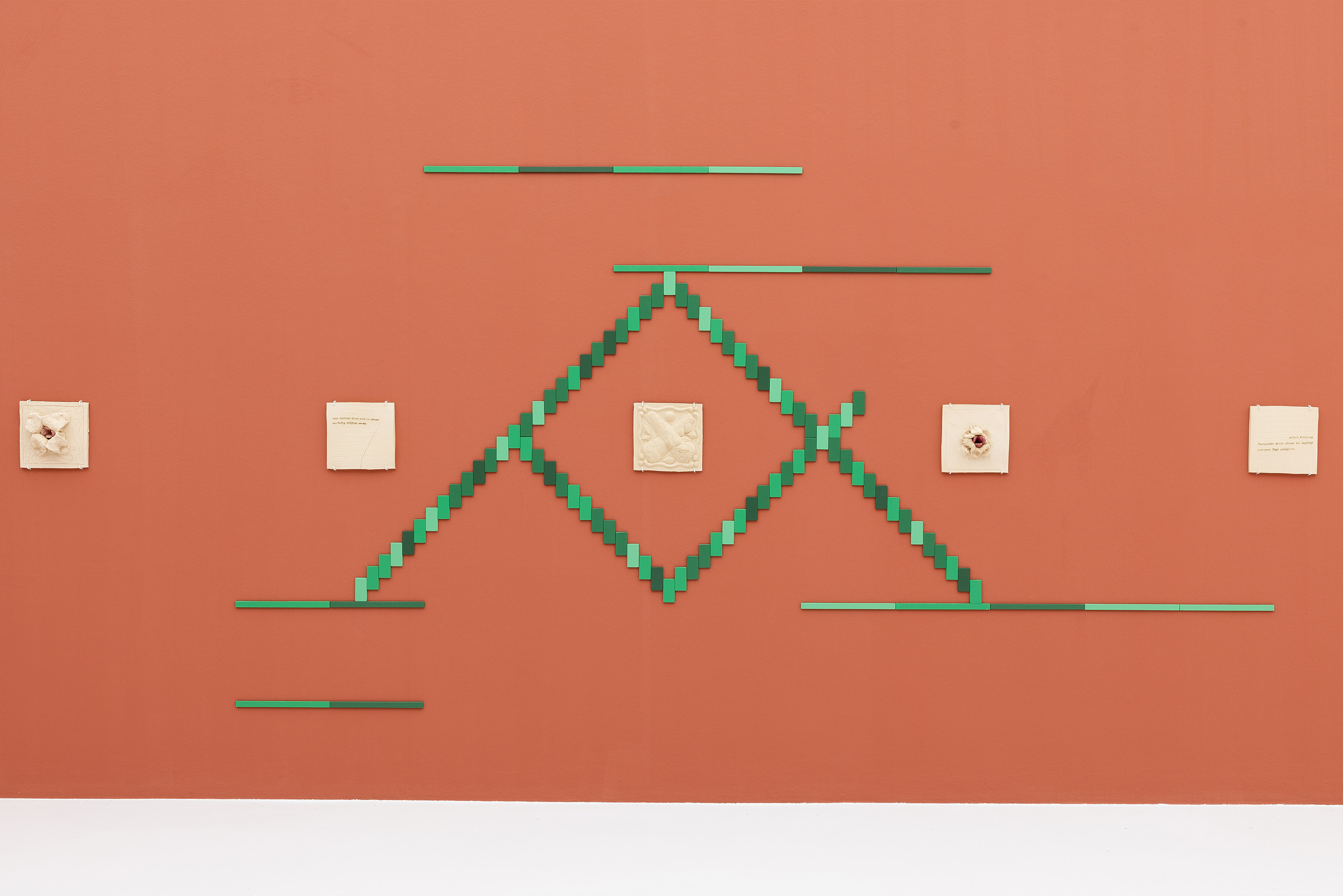
The Flowers Devoured What They Were Meant For, Installation view, Kunstverein Hannover, 2026. Photograph: Andre Germar. 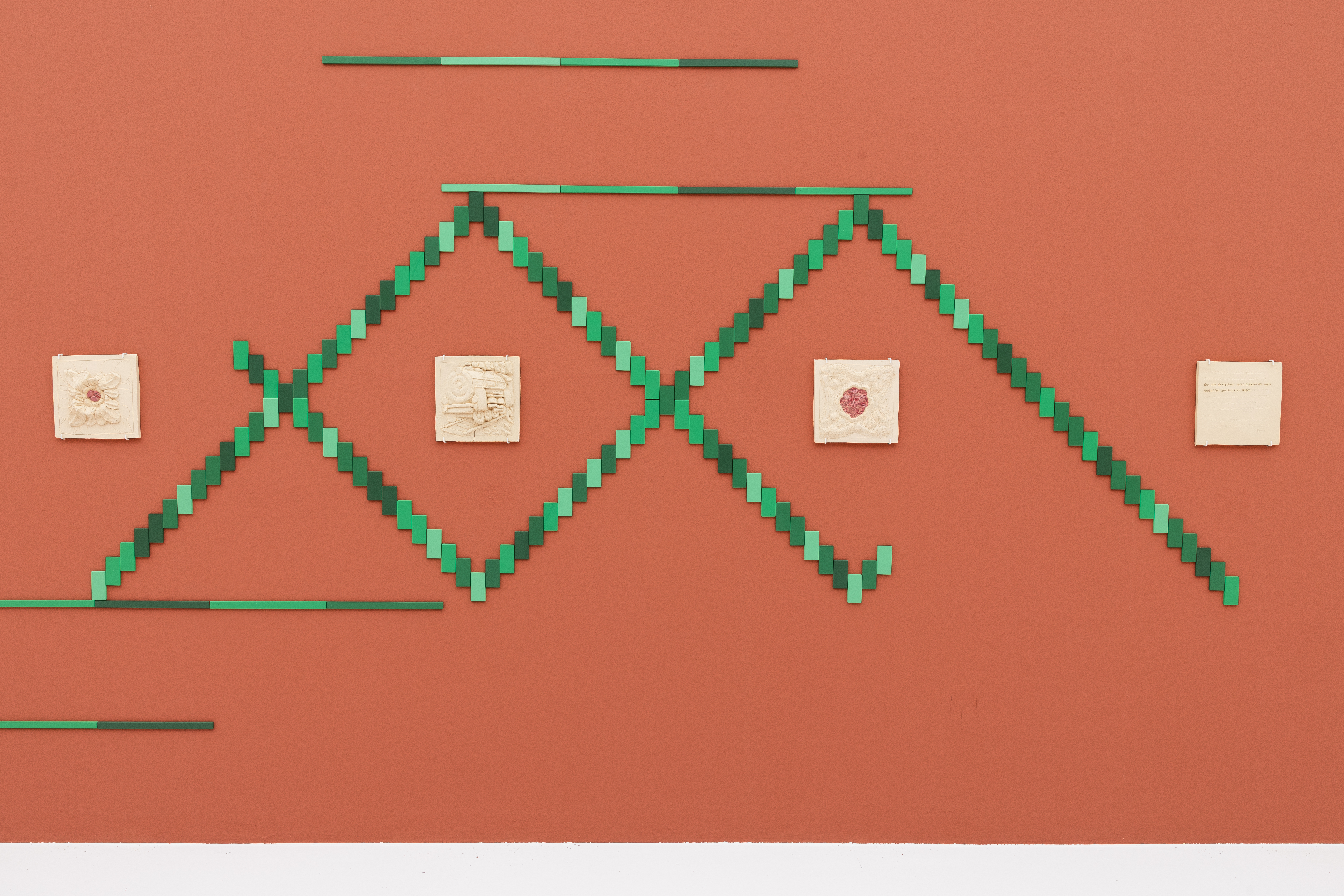
The Flowers Devoured What They Were Meant For, Installation view, Kunstverein Hannover, 2026. Photograph: Andre Germar.
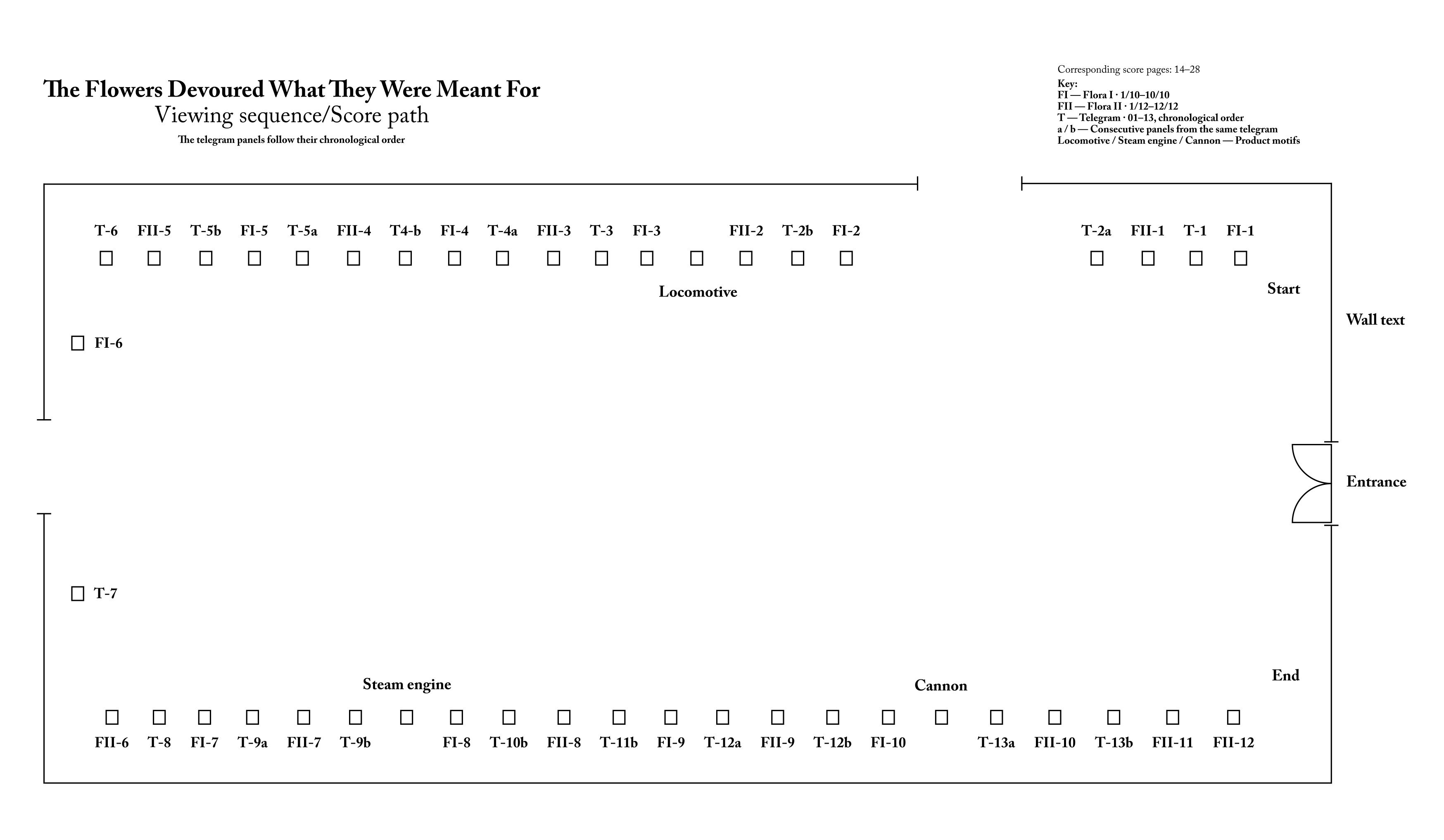
The telegram excerpts are drawn from correspondence between Constantinople and Berlin concerning the Baghdad Railway and circulated in copies marked “For Deutsche Bank.” Read chronologically, they move between locomotives, materials, construction deadlines and labour. Within this administrative language, the deportation of Armenian workers appears as an interruption to railway construction and operation. The installation draws on thirteen telegrams from 1916, presented chronologically across the room. Some telegrams are divided across more than one ceramic panel, allowing the correspondence to unfold as a sequence through the installation. Full transcriptions, translations, archival references, and the complete viewing sequence can be found in the publication.
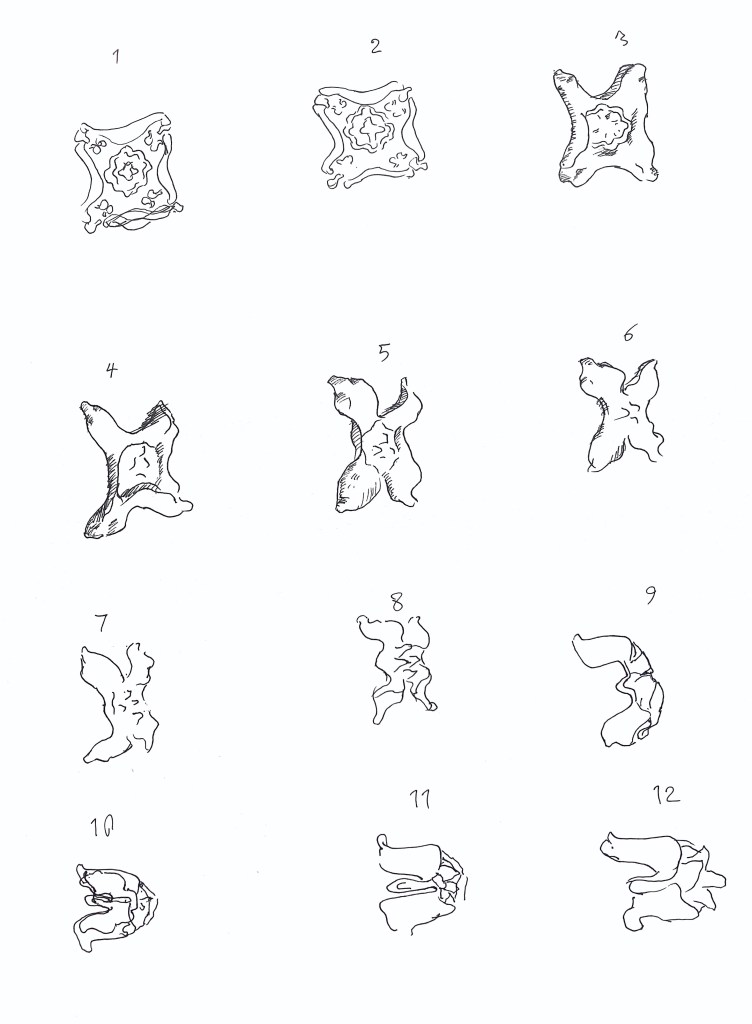
As the telegrams accumulate, the floral ornaments derived from the Hanomag façade begin to deform, their decorative forms gradually acquiring tongues. In the publication accompanying The Flowers Devoured What They Were Meant For, designed by Liudmila Savelyeva, these panels are assigned lines from Shushanik Kurghinian’s The Workers (1907), introducing another register of speech alongside the administrative language of the telegrams: one of labour, refusal, and collective arrival.
The publication extends the installation through archival documents, the poem, commissioned texts by Jonas Rahm and Azadeh Sarjoughian, and a score that follows the work’s viewing sequence, bringing the telegrams, floral panels, and product motifs into a chronological and spatial order that reworks the arrangement of the ceramic reliefs on the Hanomag façade.
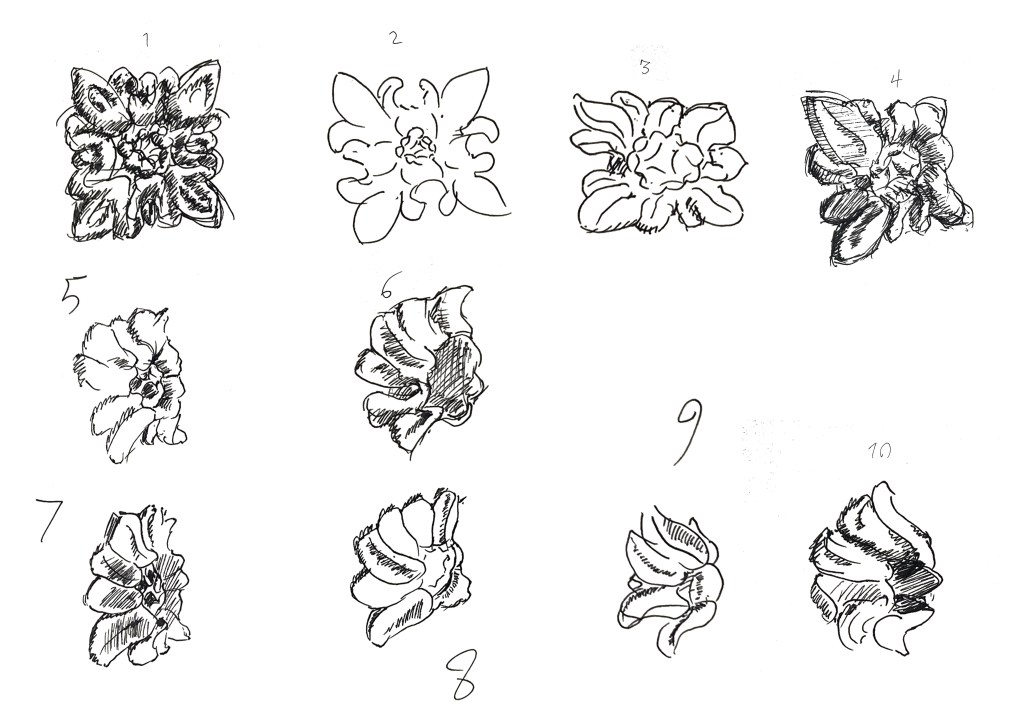
The floral motifs are developed as two sequences, Flora I (FI) and Flora II (FII). Across each sequence, the ornament gradually deforms and becomes more figurative, eventually taking on the form of a tongue. This transformation carries the work from decoration toward speech.
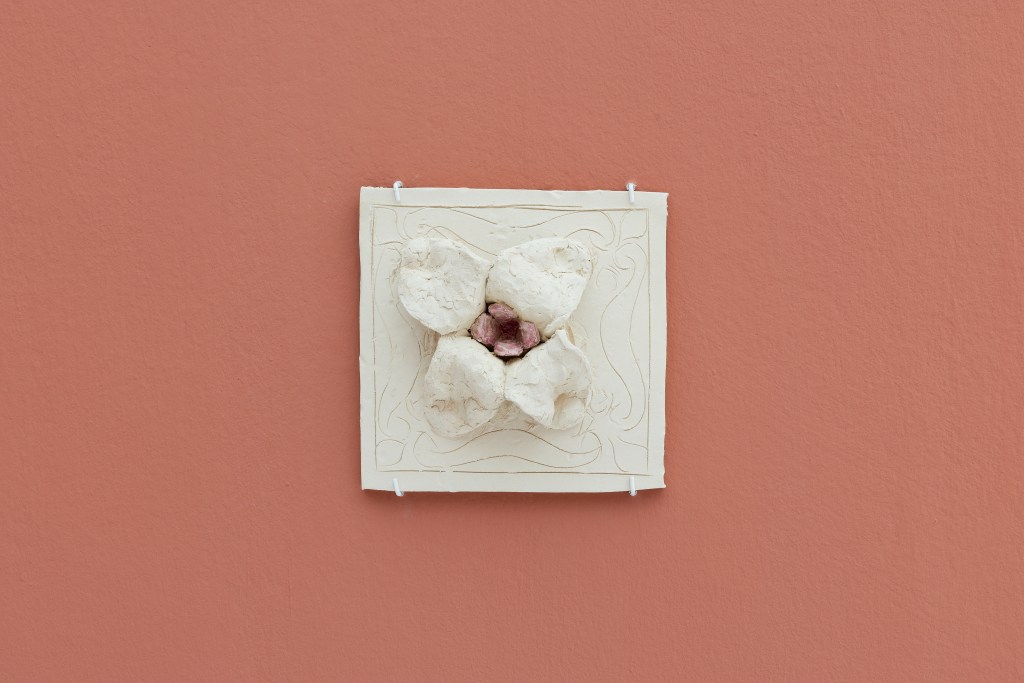
Installation view, Kunstverein Hannover, 2026. Photograph: Andre Germar.
The telegram and floral panels are installed as a continuous sequence across the room. The telegrams follow their chronology through 1916, while the two floral sequences unfold alongside them, moving from ornament toward increasingly figurative, tongue-like forms. The publication above functions as a score for navigating this sequence.
Credits
The Flowers Devoured What They Were Meant For
A project by Aria Farajnezhad
Presented at Kunstverein Hannover, 2026
Commissioned texts: Jonas Rahm, Azadeh Sarjoughian
Curatorial conversation: Carlota Gómez
Poem: Shushanik Kurghinian, The Workers (1907), translated by Shushan Avagyan
Telegram excerpts: Deutsche Bank Historical Archive, Frankfurt am Main; Baghdad Railway / Anatolian Railway correspondence, 1916
Archival material: Historisches Museum Hannover; Stadtarchiv Hannover
Ceramic technical support: Max Neumann
Research initiation with: Larissa Araz
Illustrations: Aria Farajnezhad
Graphic design: Liudmila Savelyeva
English proofreading: Angela Lieber
German proofreading: Jonas Rahm
Printed by SAXOPRINT, 2026
Supported by Kunstverein Hannover
With thanks to
Dorsa Eidizadeh
Natascha Sadr Haghighian
Bubu Mosiashvili
Farzad Golghasemi
Annette Hans
Mari Kalabegashvili
Martin-L Mueller
Holger Horstmann
Harry Blume
Hendryk Claussen
With thanks to Shushan Avagyan, Victoria Rowe, Roubina Margossian, and Nairi Khatchadourian for their support around the poem and its use.
A Trial to Remember / Self Implosion: Towards Plural Present, May 2025
In collaboration with Larissa Araz
The project developed from a joint lecture performance with Larissa Araz exploring the entangled histories of infrastructure, representation, and violence through the Berlin–Baghdad Railway, a German–Ottoman project financed by Deutsche Bank and built in significant part through Armenian labour. Framed through the Armenian Genocide, the research examines how technologies of connectivity were bound to processes of displacement, erasure, and imperial expansion.
The lecture moves through two interwoven lines of inquiry. One follows the material and ideological dimensions of infrastructure—water towers, tunnels, railways, and other forms through which territory was crossed, organised, and brought under imperial control. The other turns to representation, particularly photographs produced by companies such as Philipp Holzmann, asking how the archive privileges the perspective of the German engineer while Armenian labour remains largely outside the image. Photography appears here both as historical evidence and as a mechanism through which violence can be obscured or rendered peripheral.
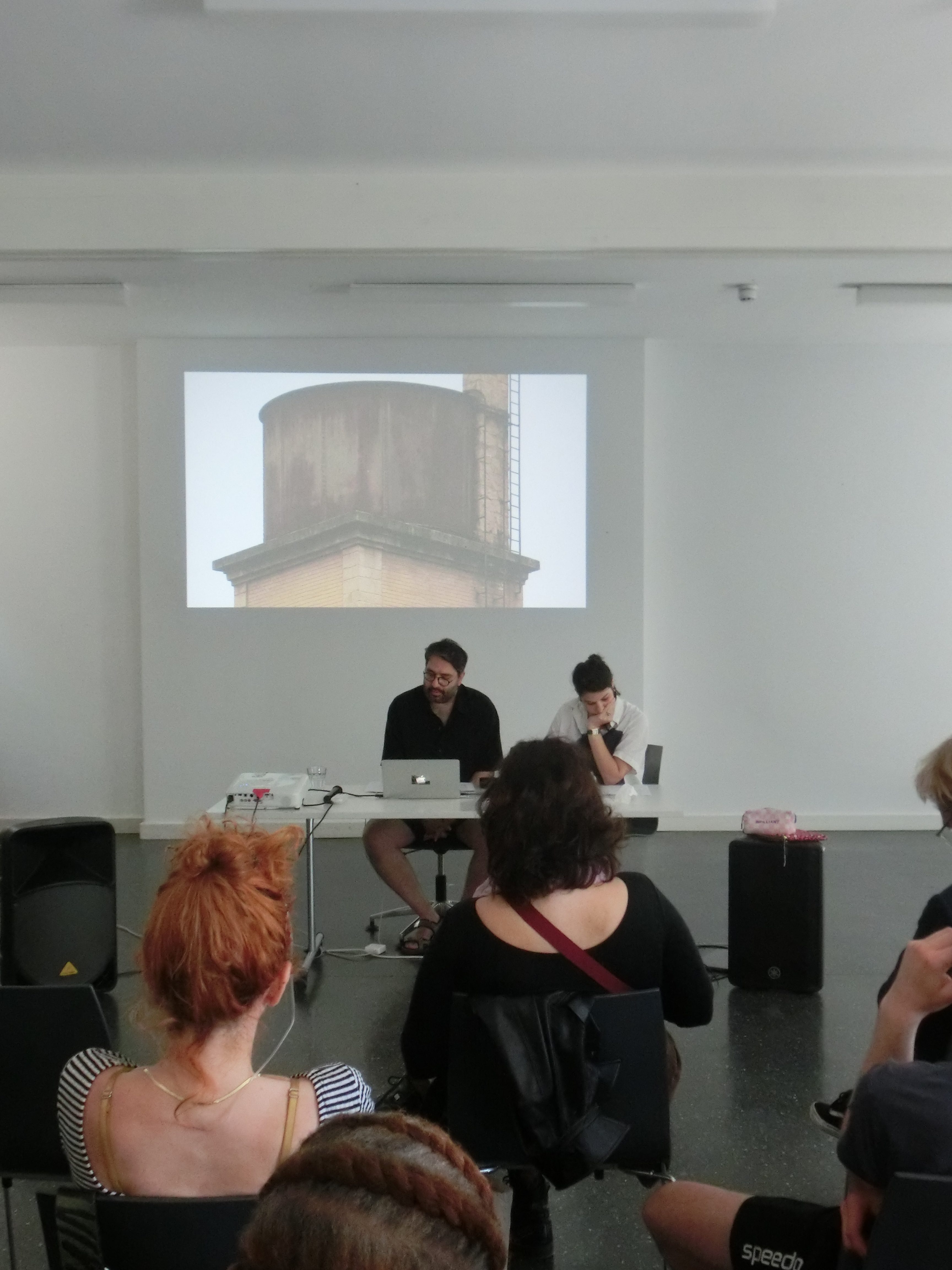
A demo version of the lecture performance is available upon request.

